WORKSOUT OPEN IN AOYAMA, TOKYO AND DESIGNER ANDREA CAPUTO HAS GONE ABOVE AND BEYOND
The building designed for Worksout in Tokyo’s Aoyama district by Andrea Caputo Studio seeks to reconfigure the aesthetic and linguistic codes that have long shaped the area’s architectural identity. Aoyama has historically been defined by the presence of flagship stores for major fashion houses, where architectural expression is often entrusted to the spectacle of luxury and to the display of precious materials as the primary device for façades, envelopes, and spatial narrative.
The project questions whether this logic may today appear exhausted ̶or at least rooted in a different historical moment. In an era marked by pervasive uncertainty ̶economic, environmental, cultura ̶l and by increasingly indeterminate visions of the future, it becomes necessary to explore alternative registers of expression: not less sophisticated, but grounded in a different imaginary.
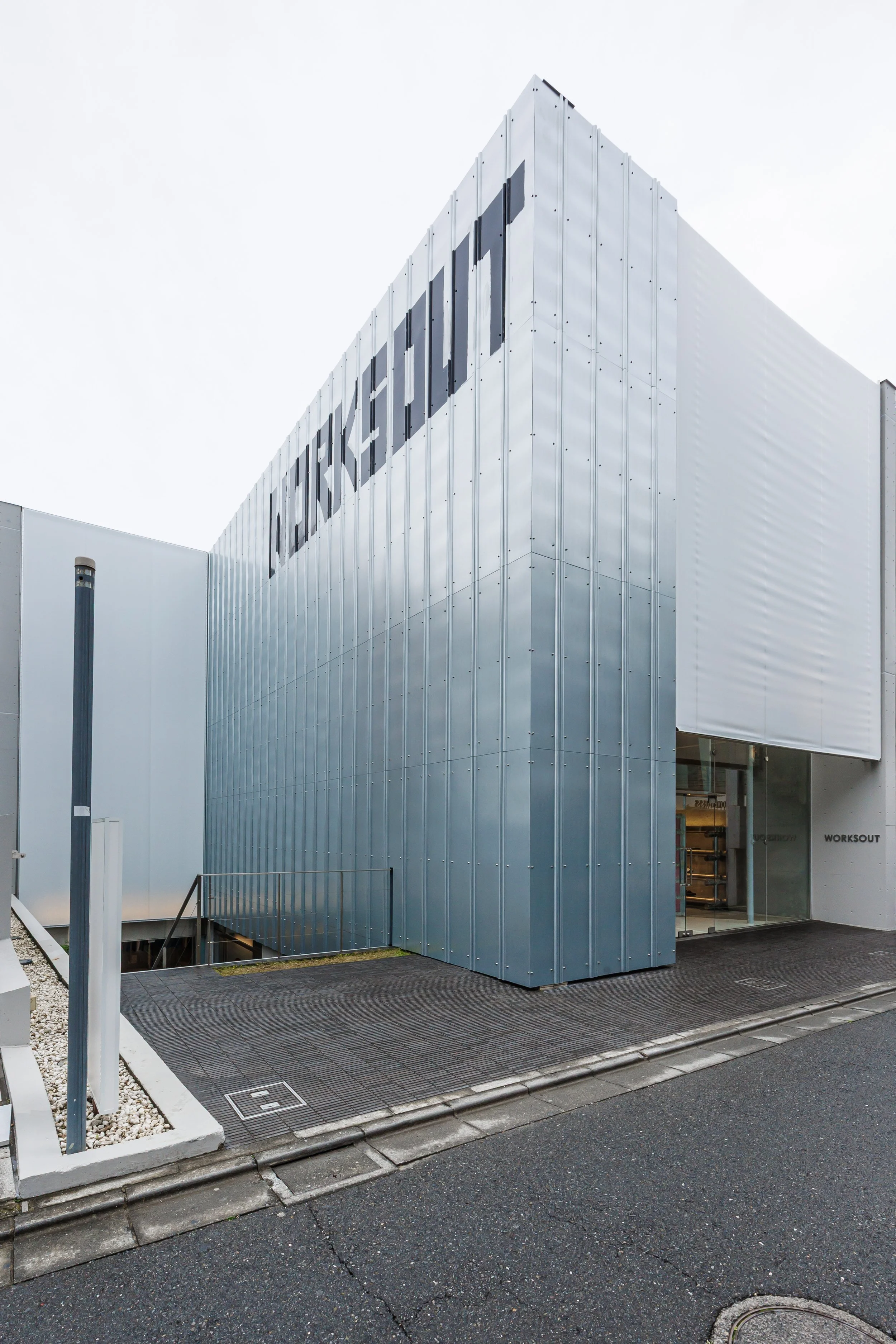
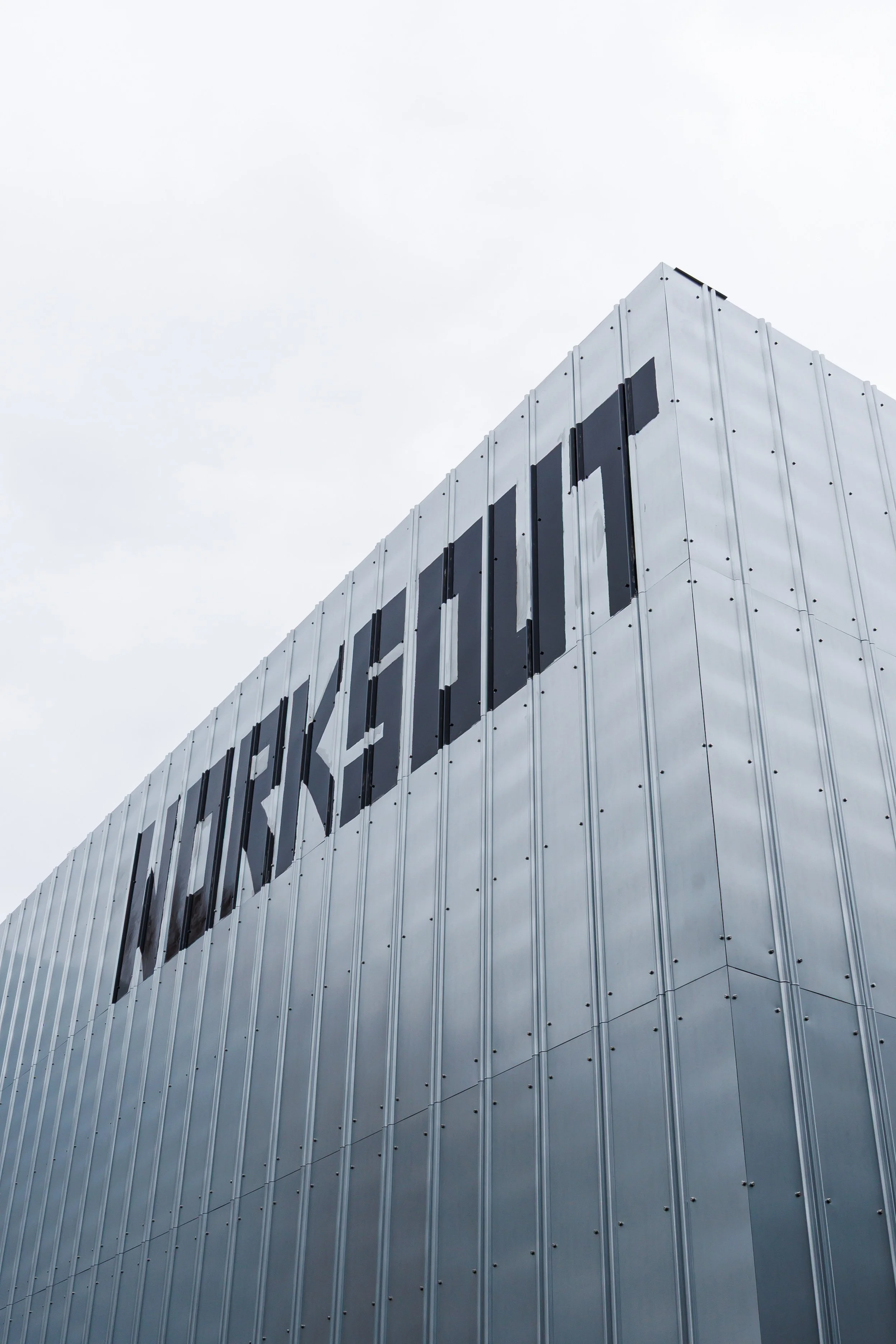
From this premise emerges a deliberate engagement with the notion of temporality. The building’s cladding draws directly from the transitional landscapes of Japanese construction sites̶ and, more broadly, from those found in cities worldwide ̶adopting off-the-shelf elements and prefabricated materials readily available on the market. A deliberately simple reinforced-concrete structure is wrapped in a lightweight aluminium scaffolding system that recalls the provisional frameworks of urban construction. Towards the street, the building does not seek to assert an iconic or definitive presence; rather, it inserts itself into the visual continuum of works-in-progress, embracing ephemerality as a compositional principle.
In parallel, the project introduces a second layer of linguistic suspension through the deployment of large textile surfaces. These fabrics evoke both the protective wraps commonly used on scaffolding and the scale of urban billboards, further destabilising the notion of façade as a fixed and resolved condition. The result is an architectural device poised between presence and withdrawal, between construction and image.
It is especially in its nocturnal condition that this strategy finds its most expressive potential. When illuminated, the textile envelope becomes an abstract luminous field capable of absorbing and reflecting the visual intensity of its surroundings. In this sense, the project establishes an implicit dialogue with the work of photographer Hiroshi Sugimoto, particularly his 1993 drive-in theatre images, in which the camera’s exposure time coincides with the entire duration of a film projection. The resulting photographs appear as neutral, almost blank surfaces, yet they condense within a single frame hours of movement and narrative. Similarly, the scaffolding building aspires to produce a form of active neutrality ̶a suspension of language that generates meaning precisely through subtraction. Within a context as resonant, cacophonous, and highly exposed as Aoyama, this strategy is not conceived as a mimetic gesture but as a critical stance: an invitation to reconsider the relationship between architecture, image, and time in the contemporary city.
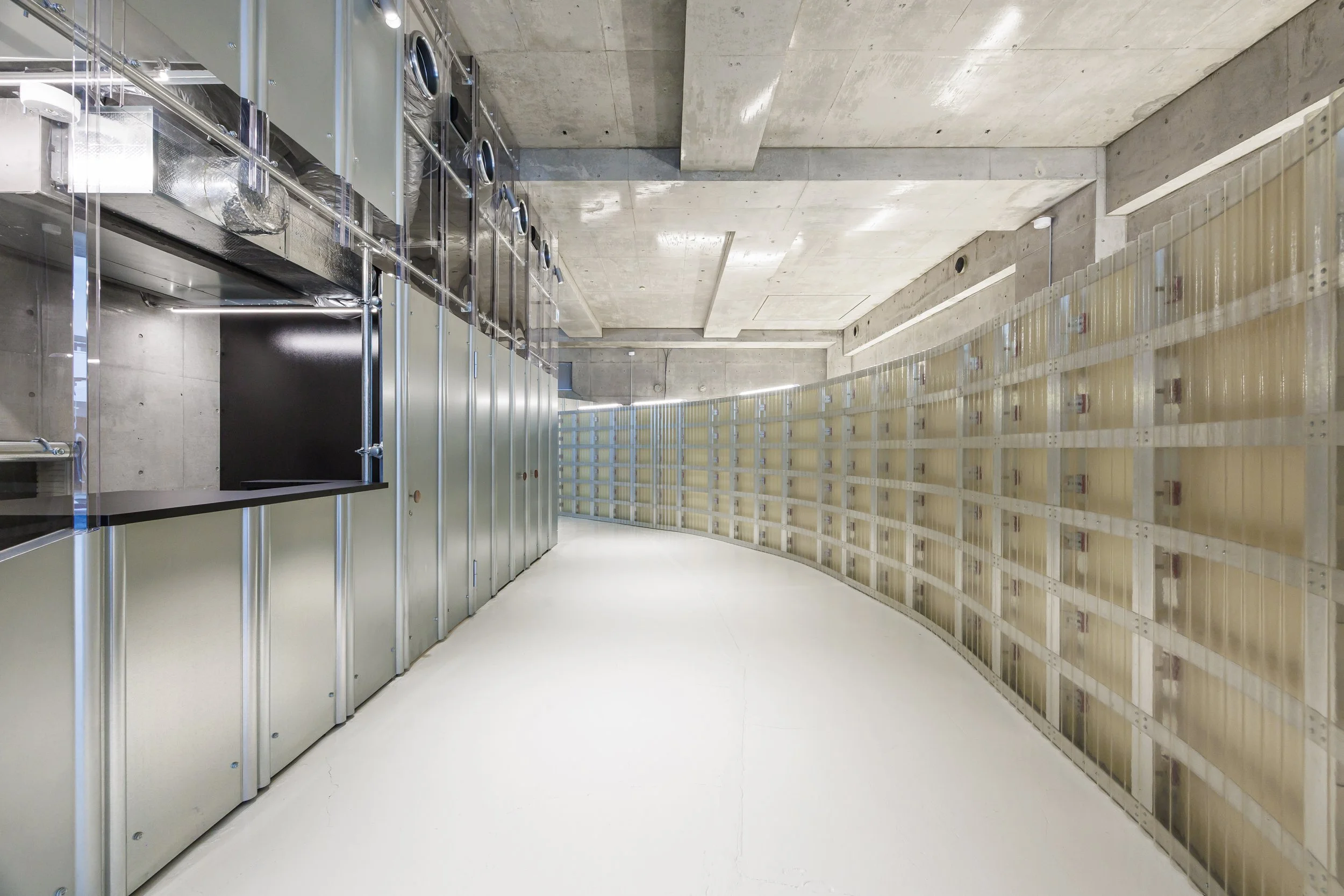
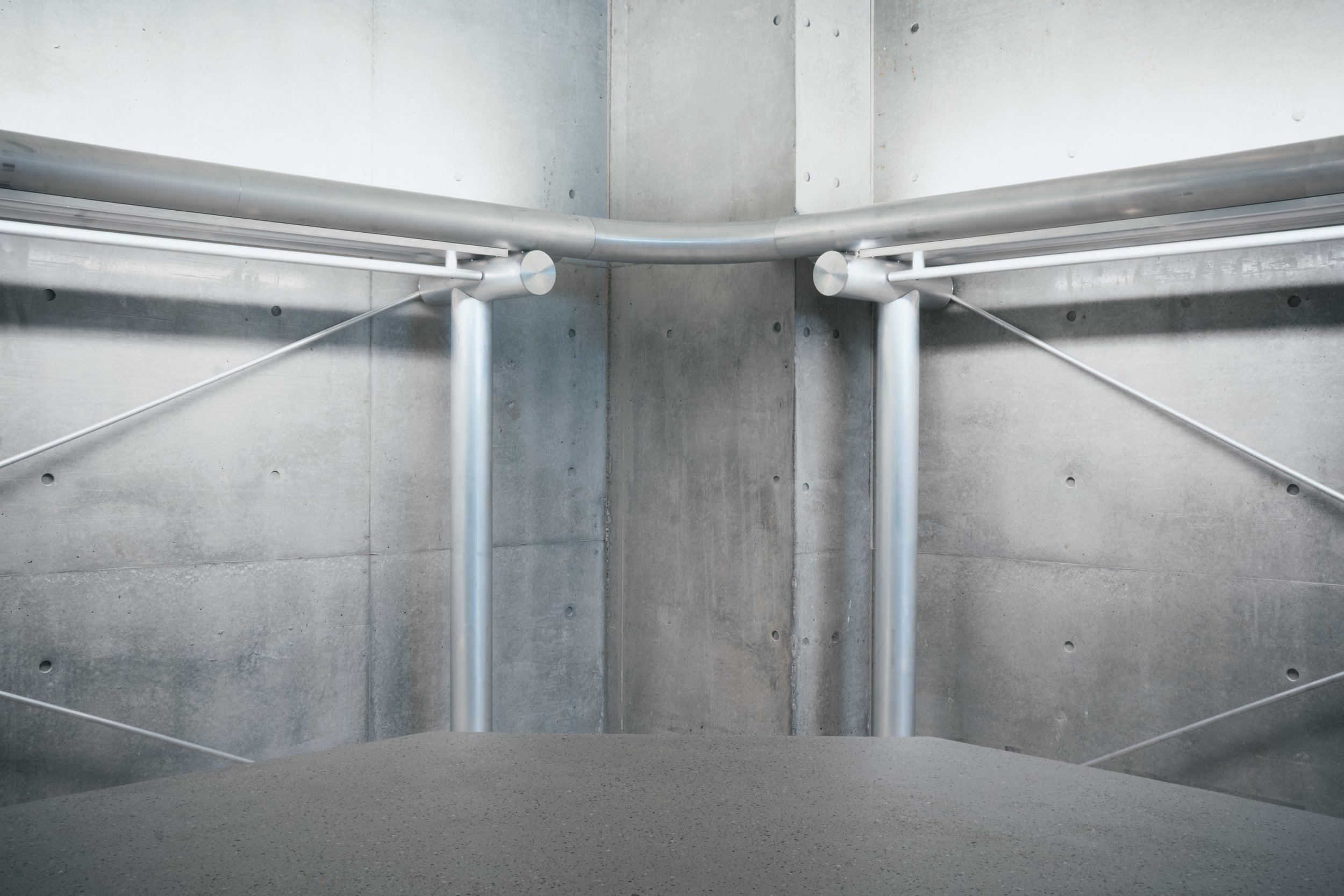
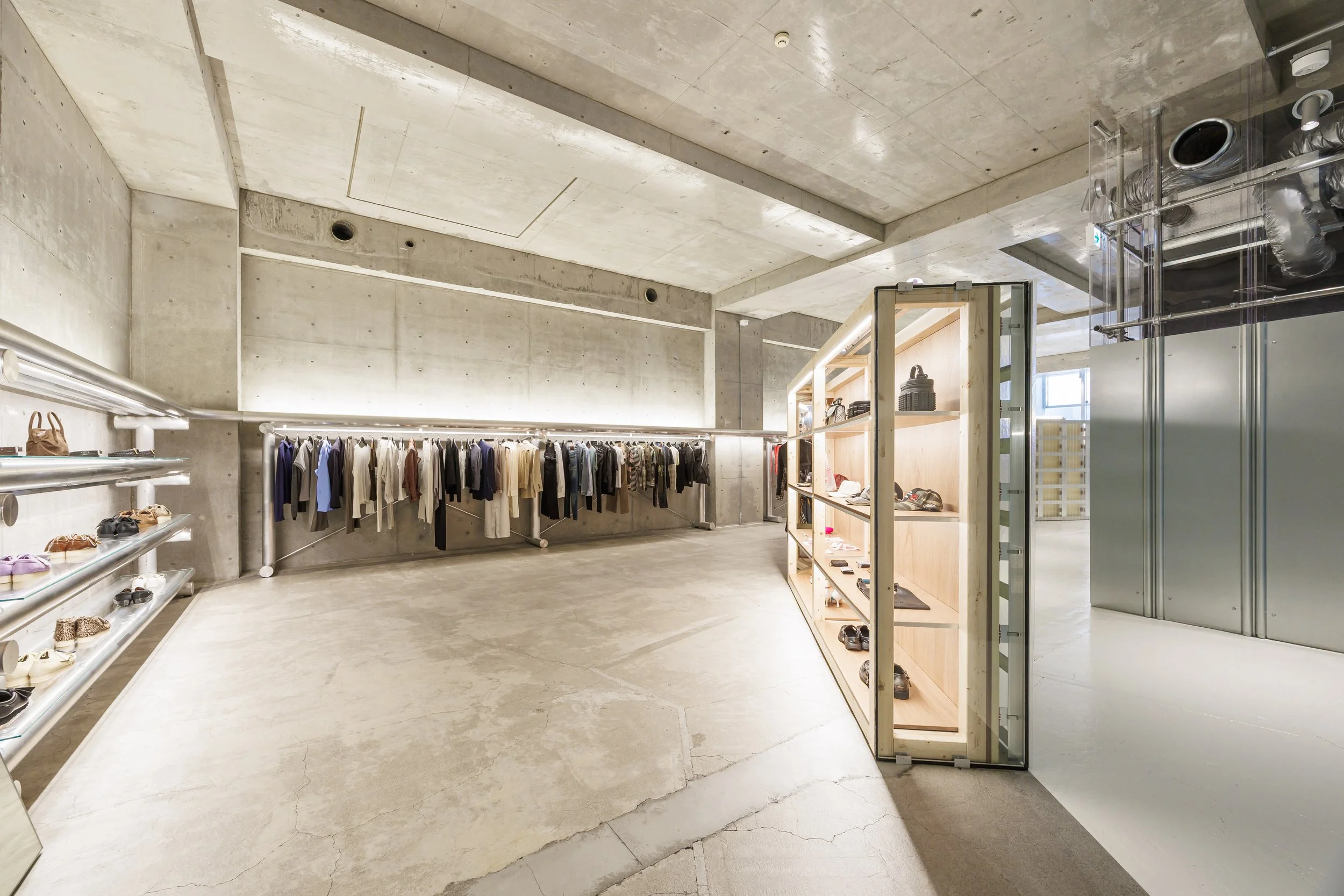
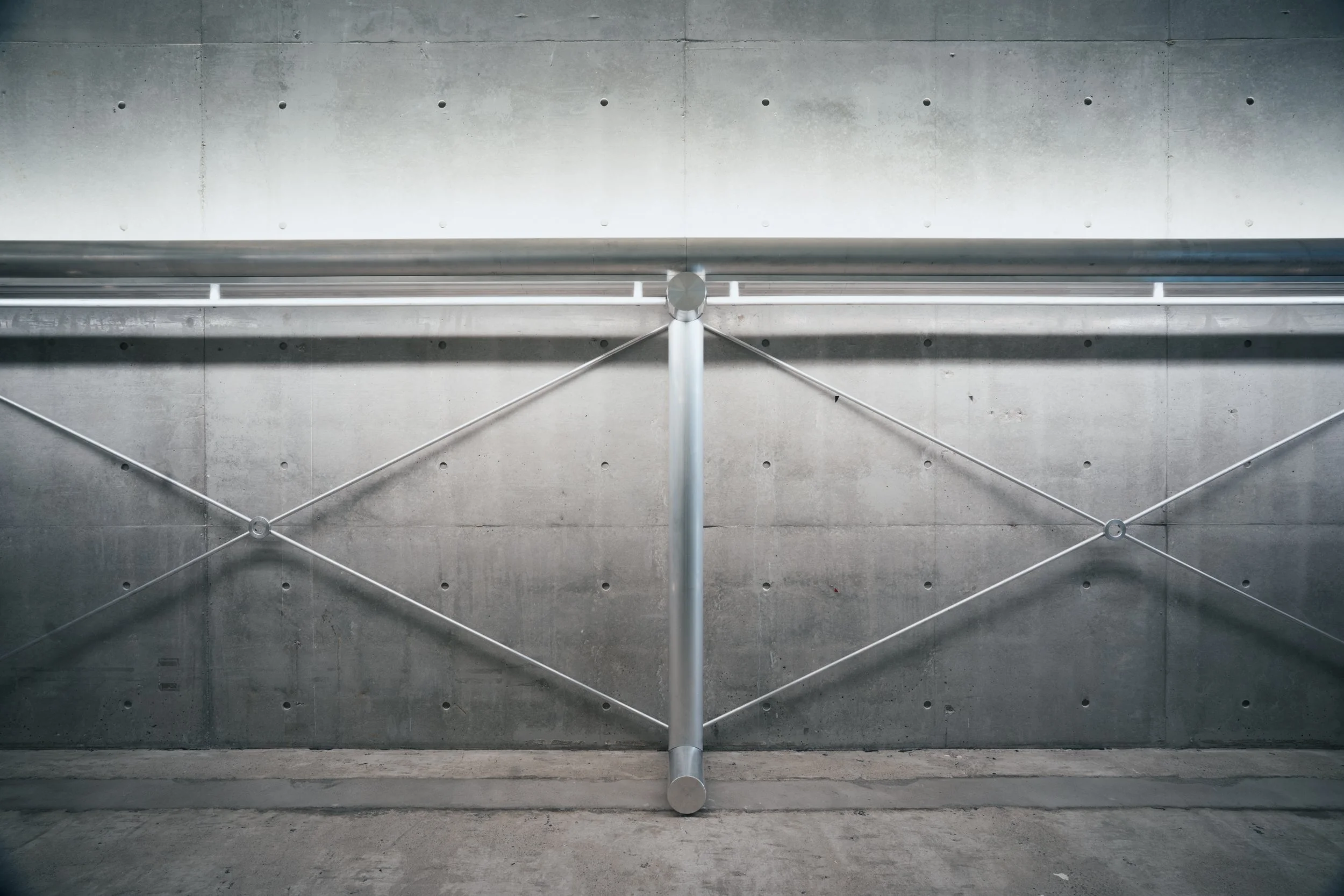
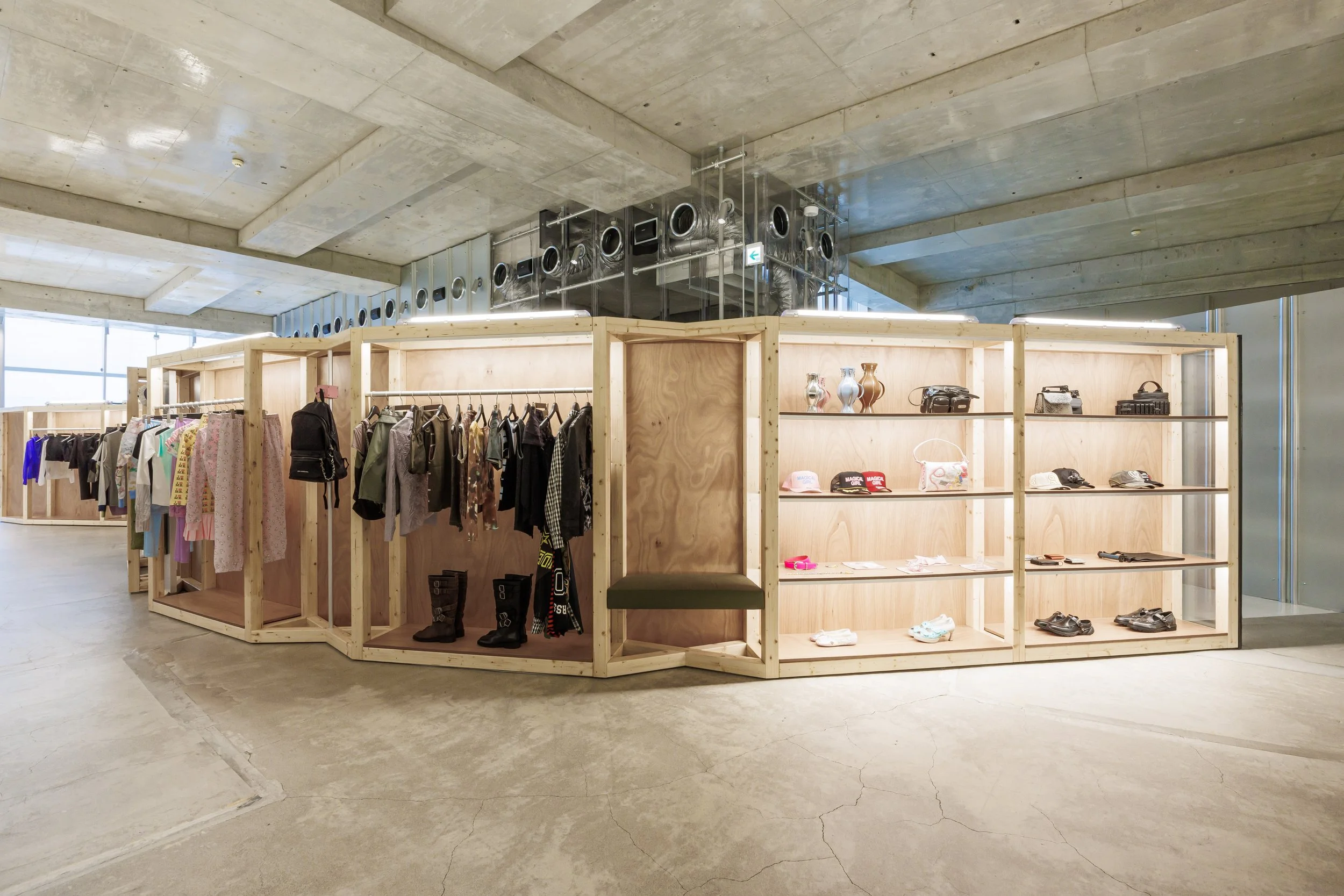
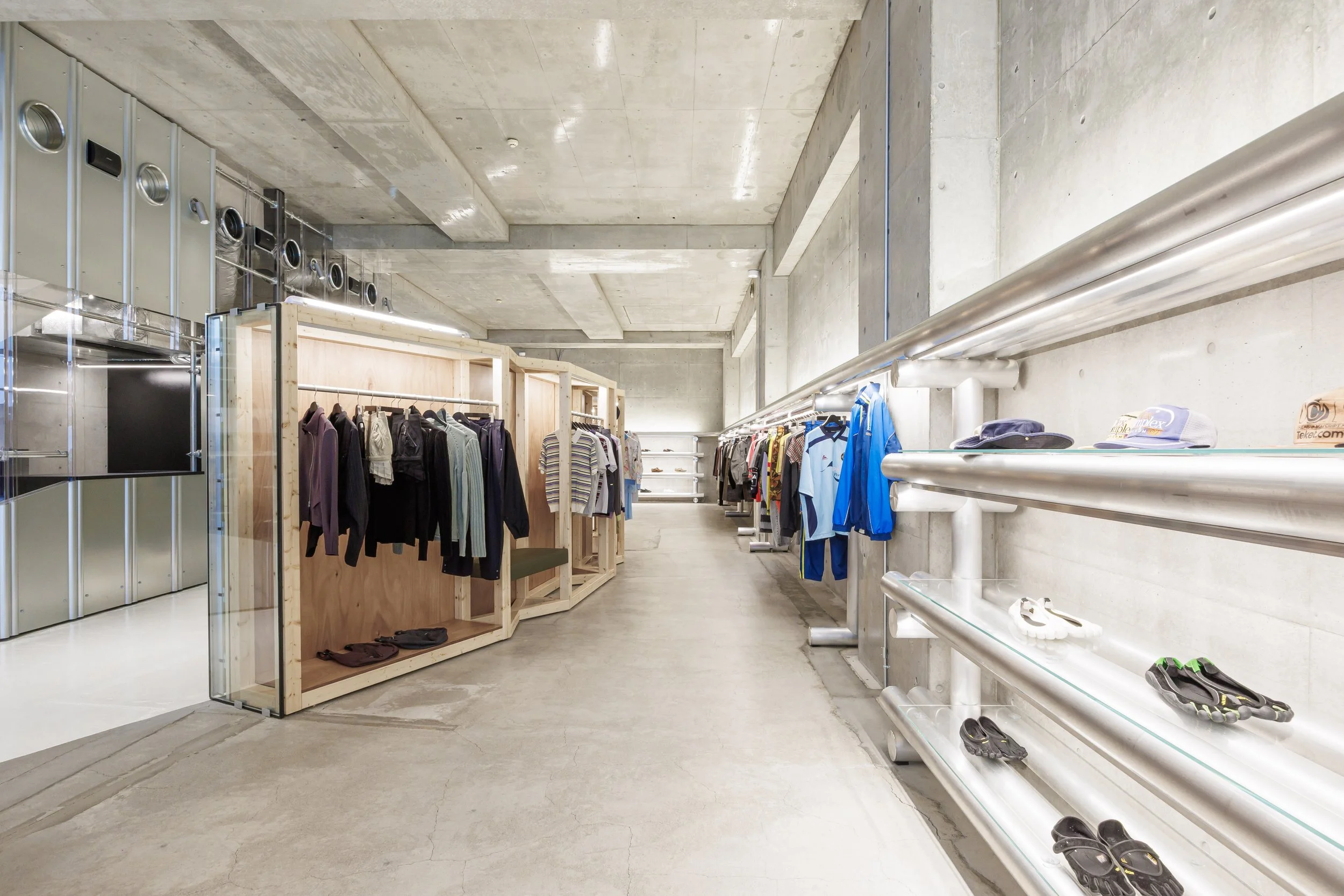
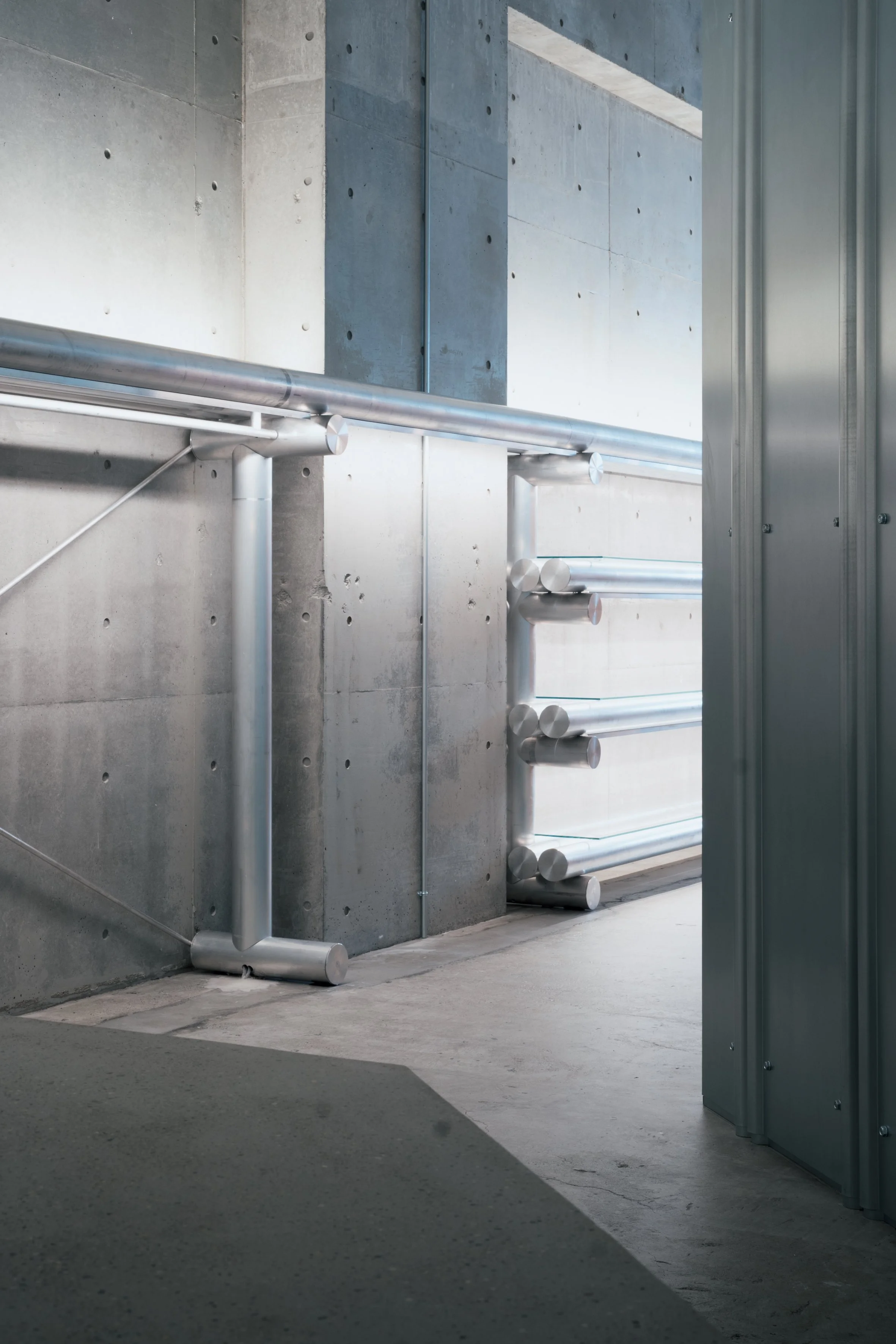
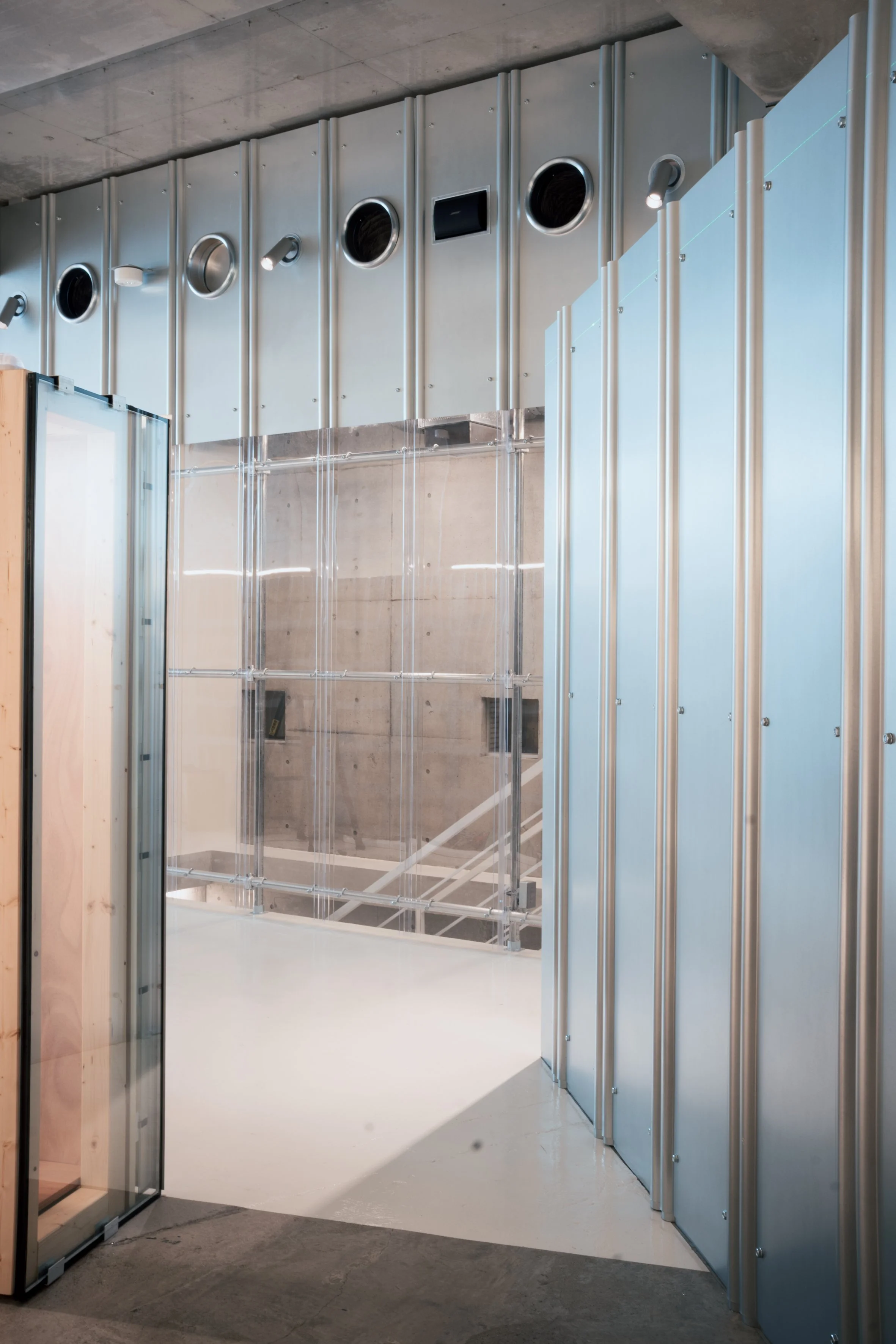
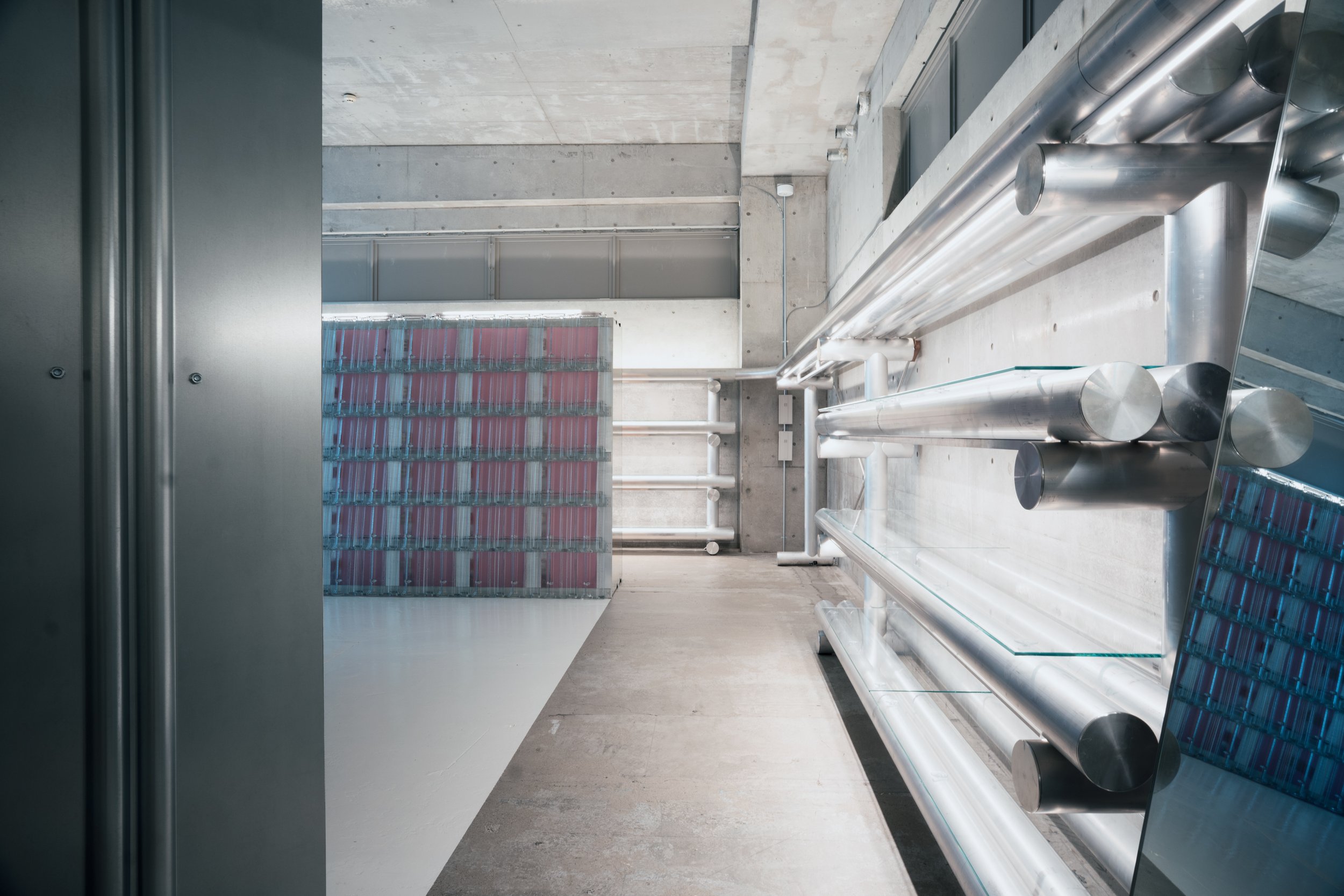
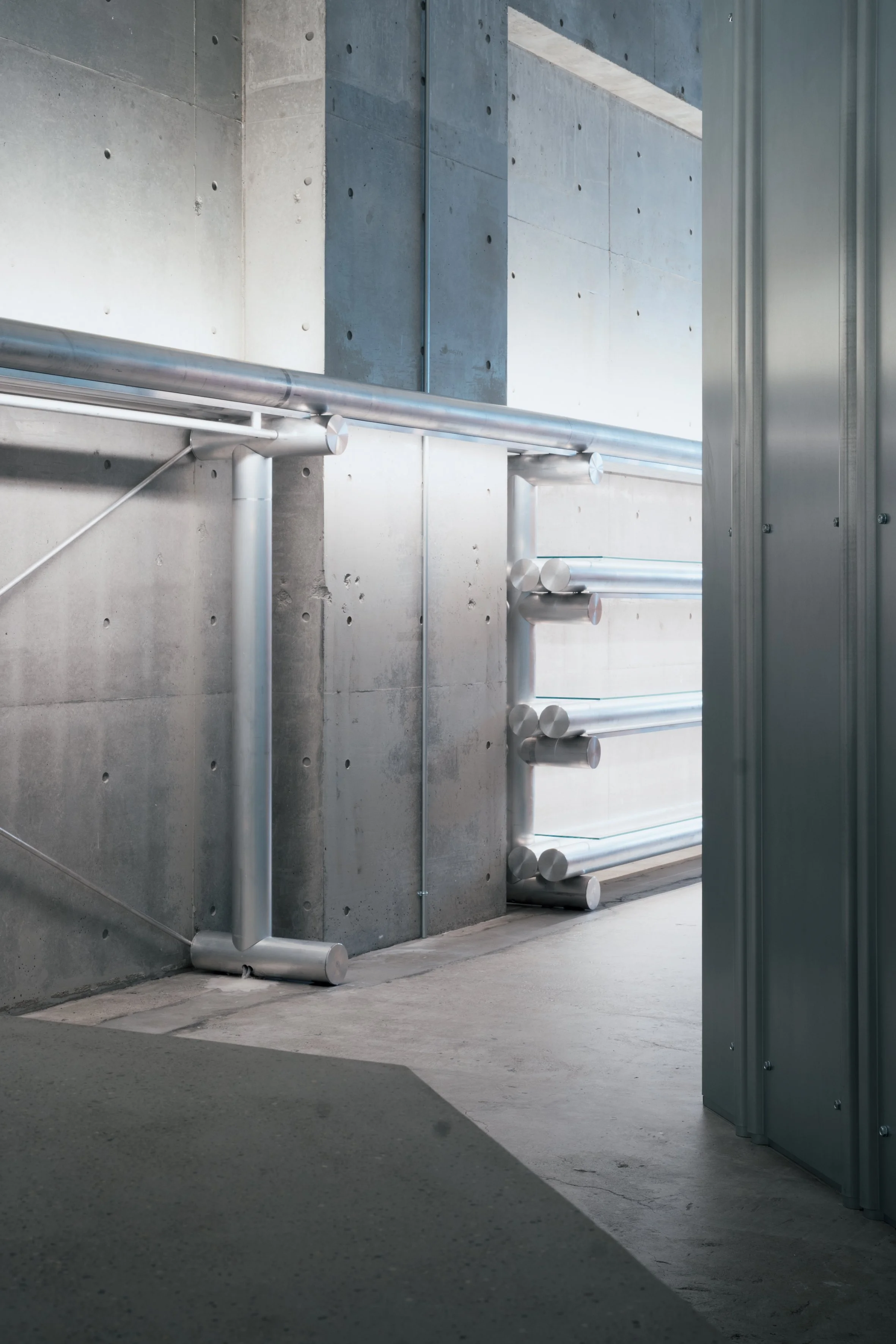
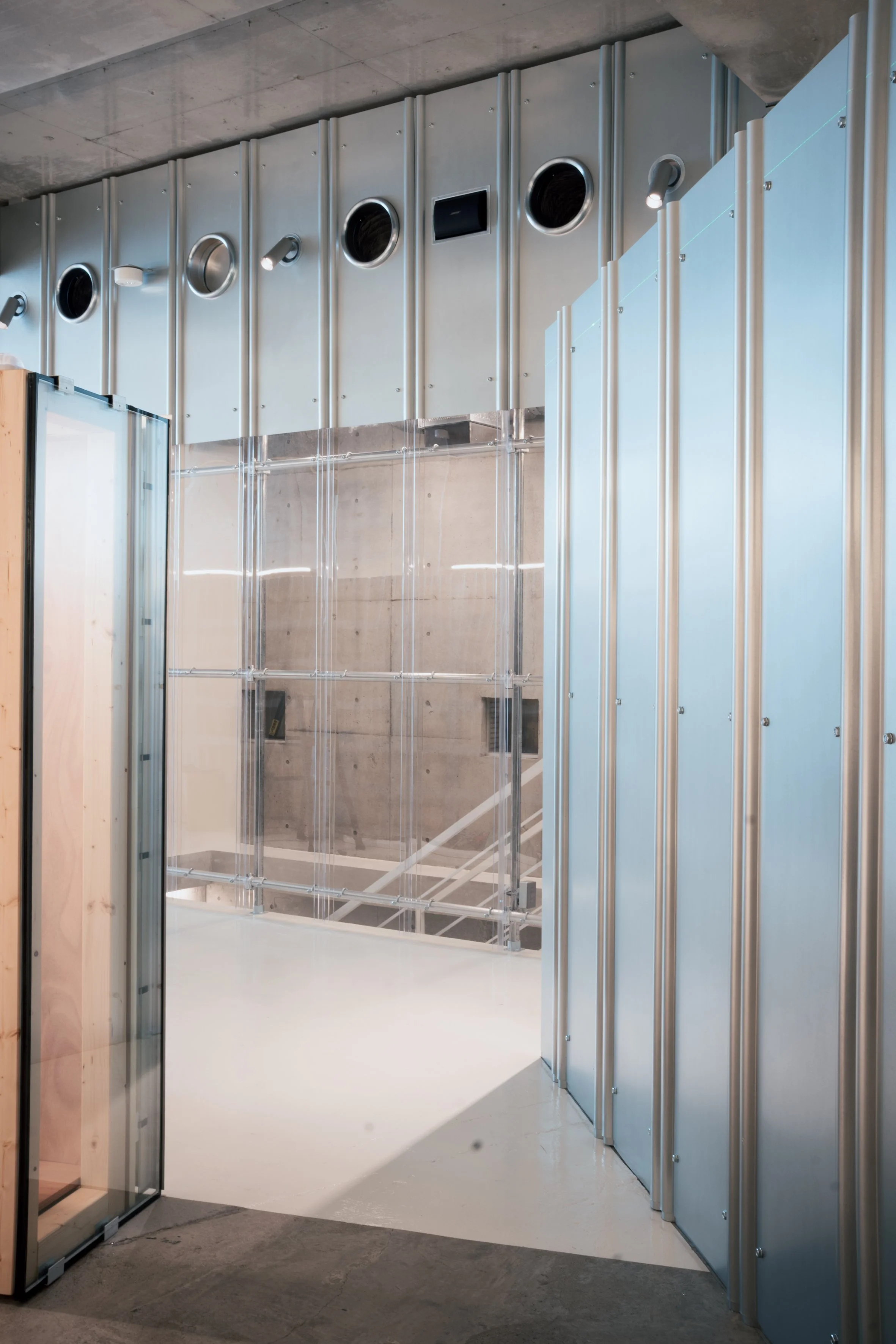
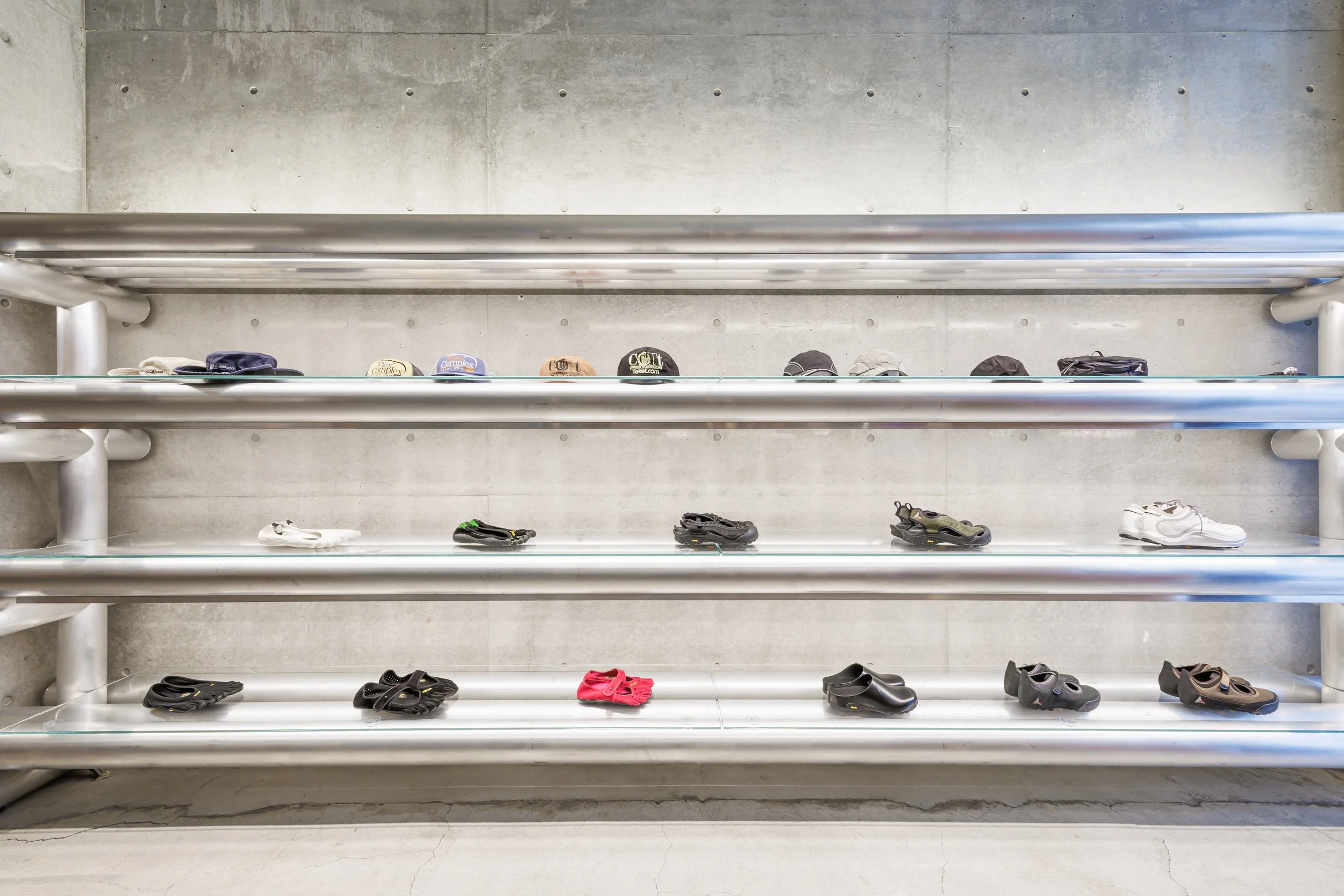
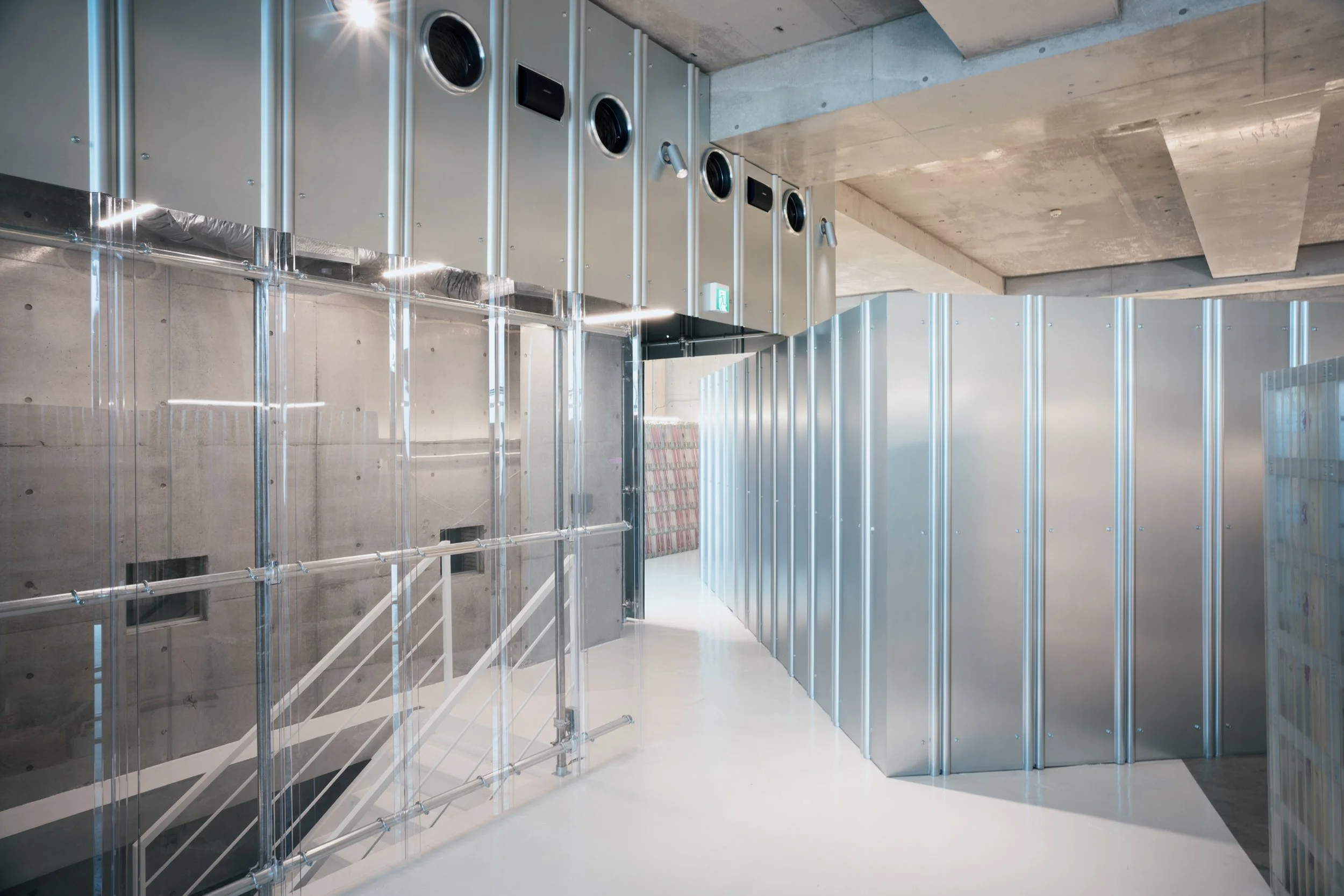
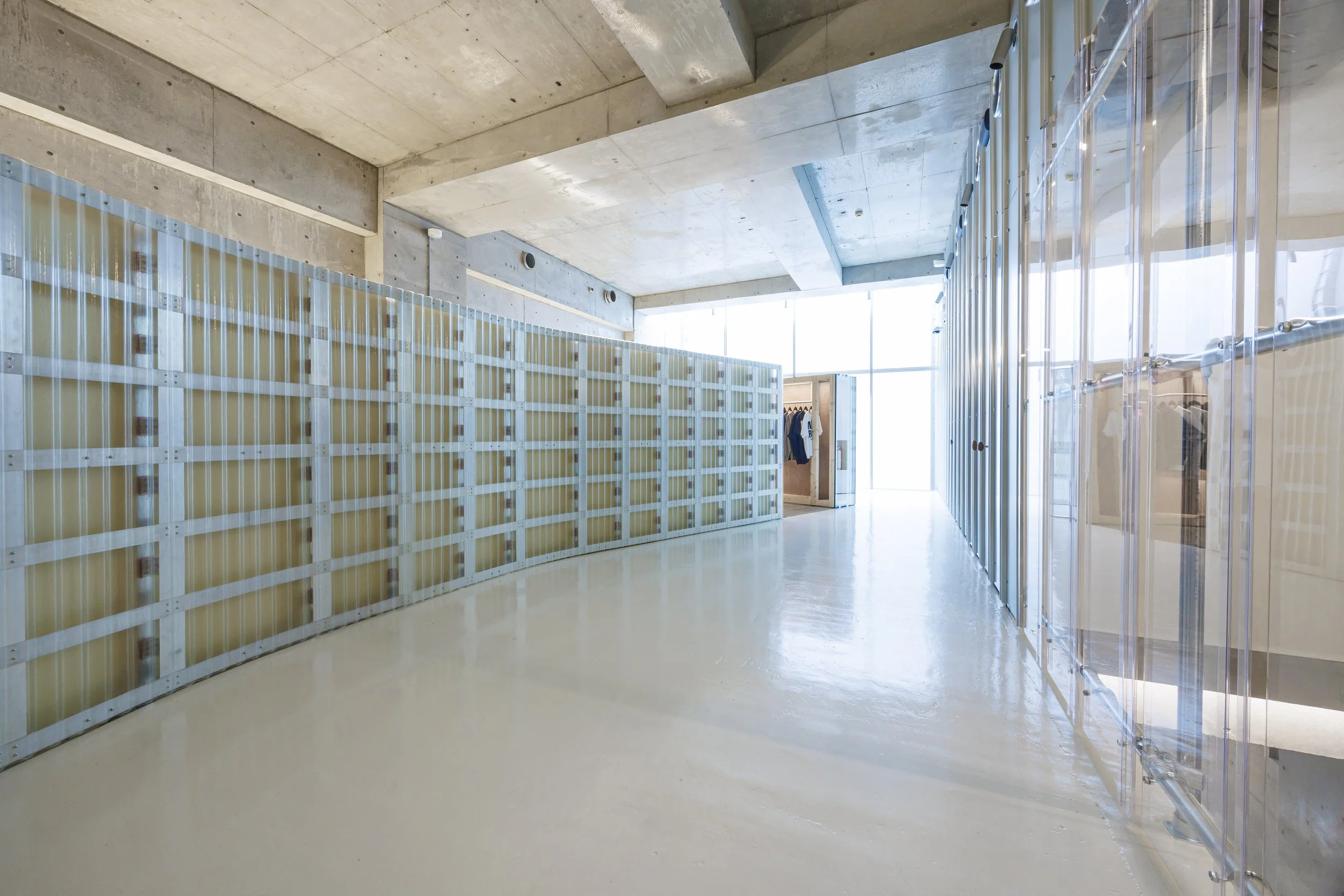
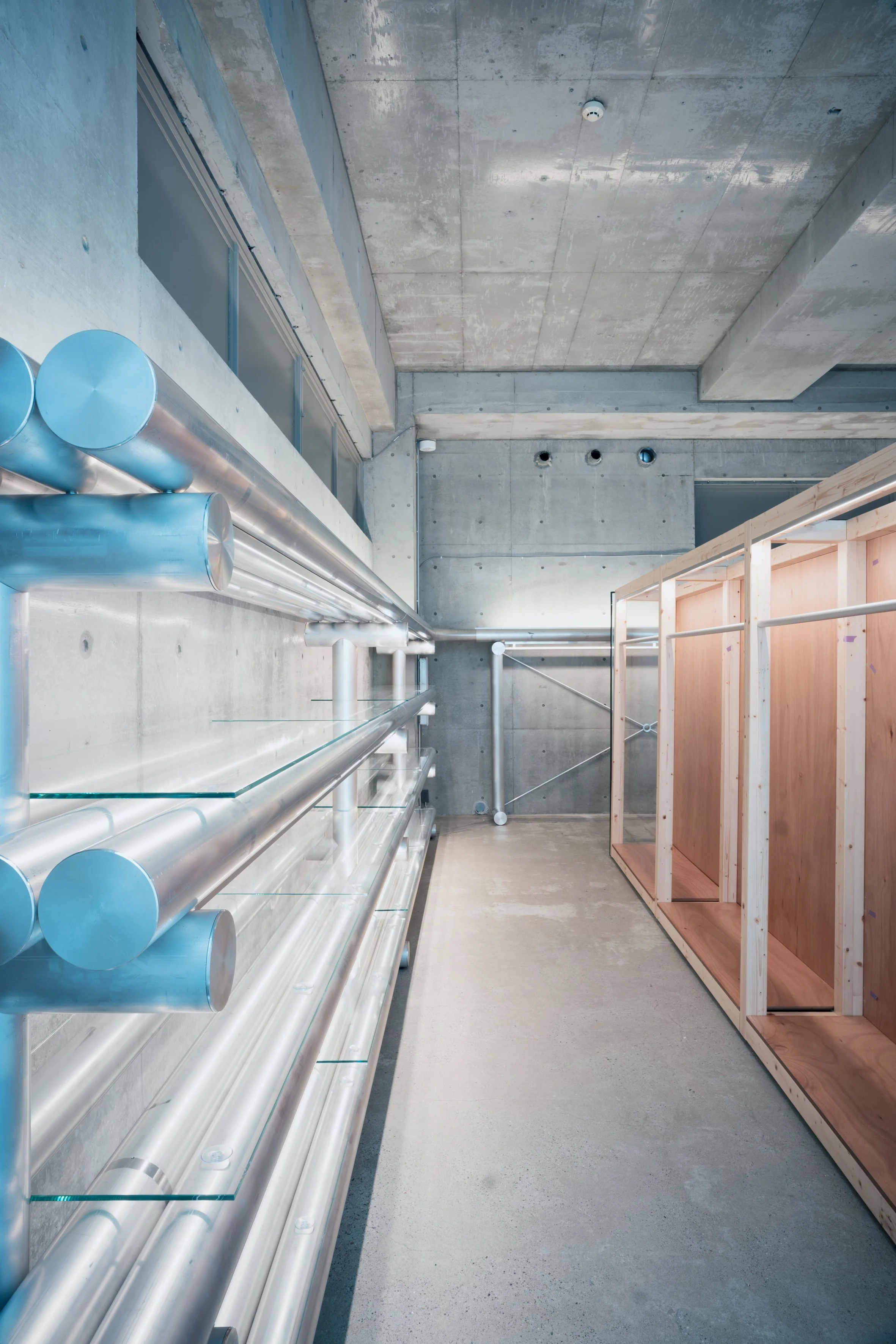
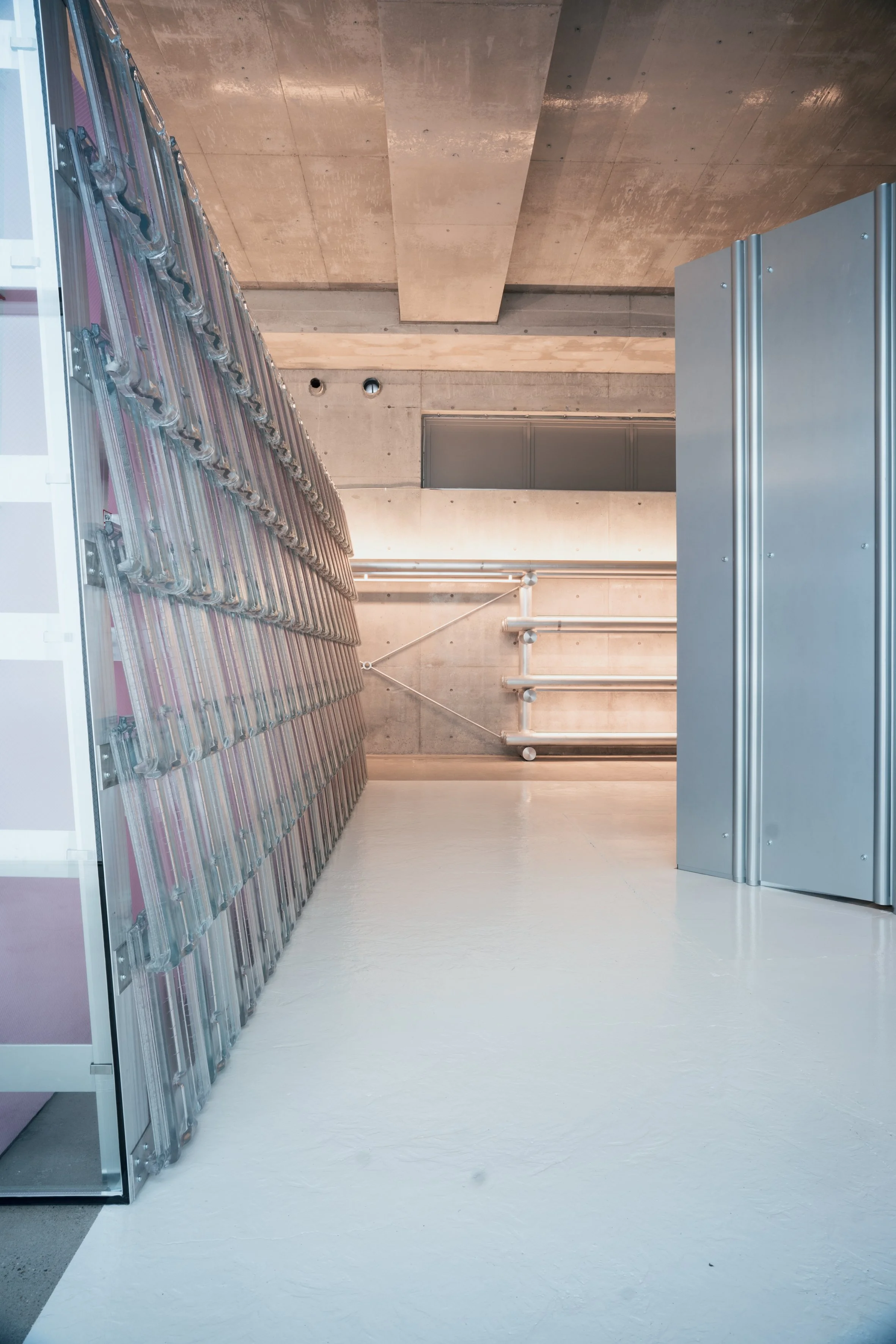
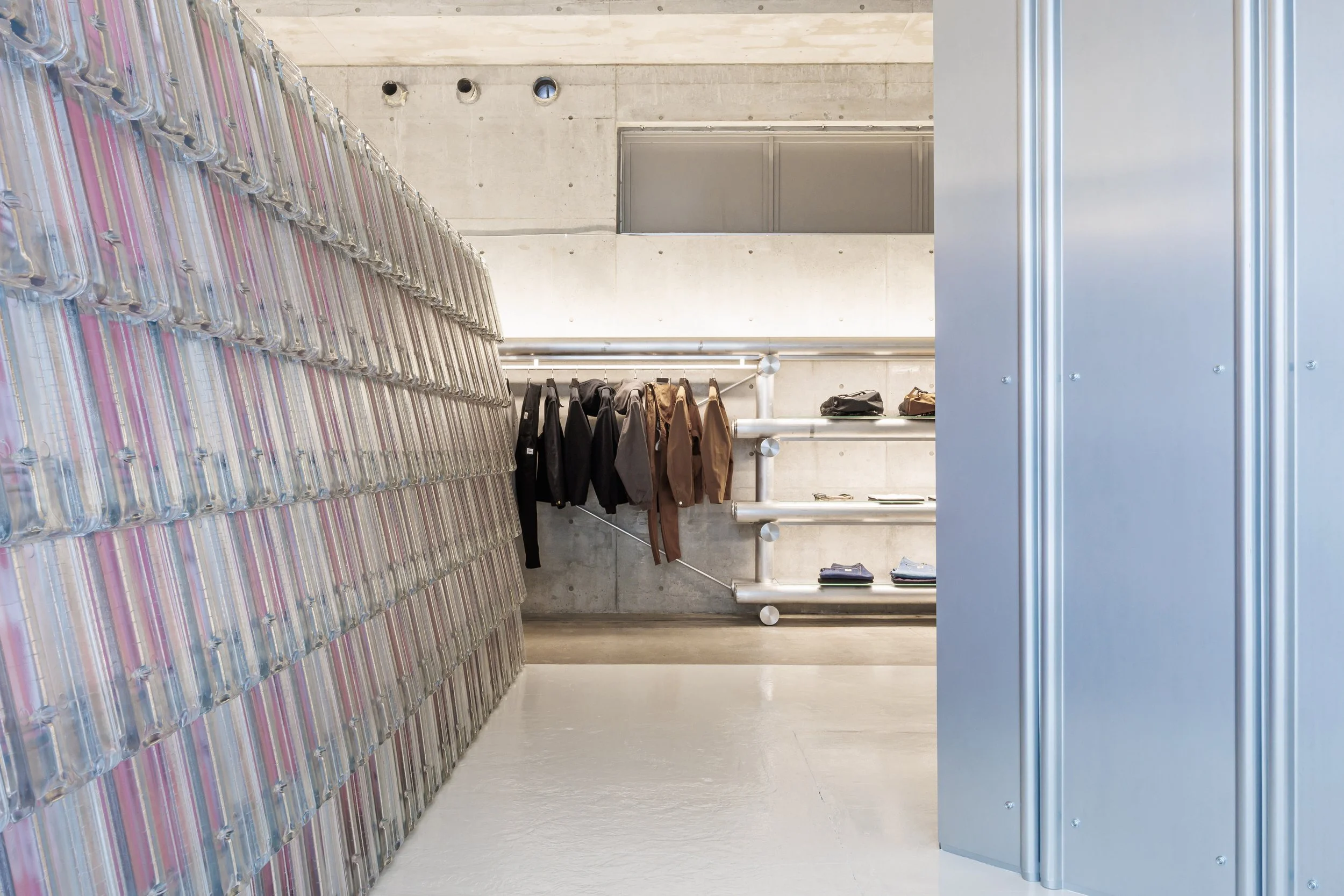
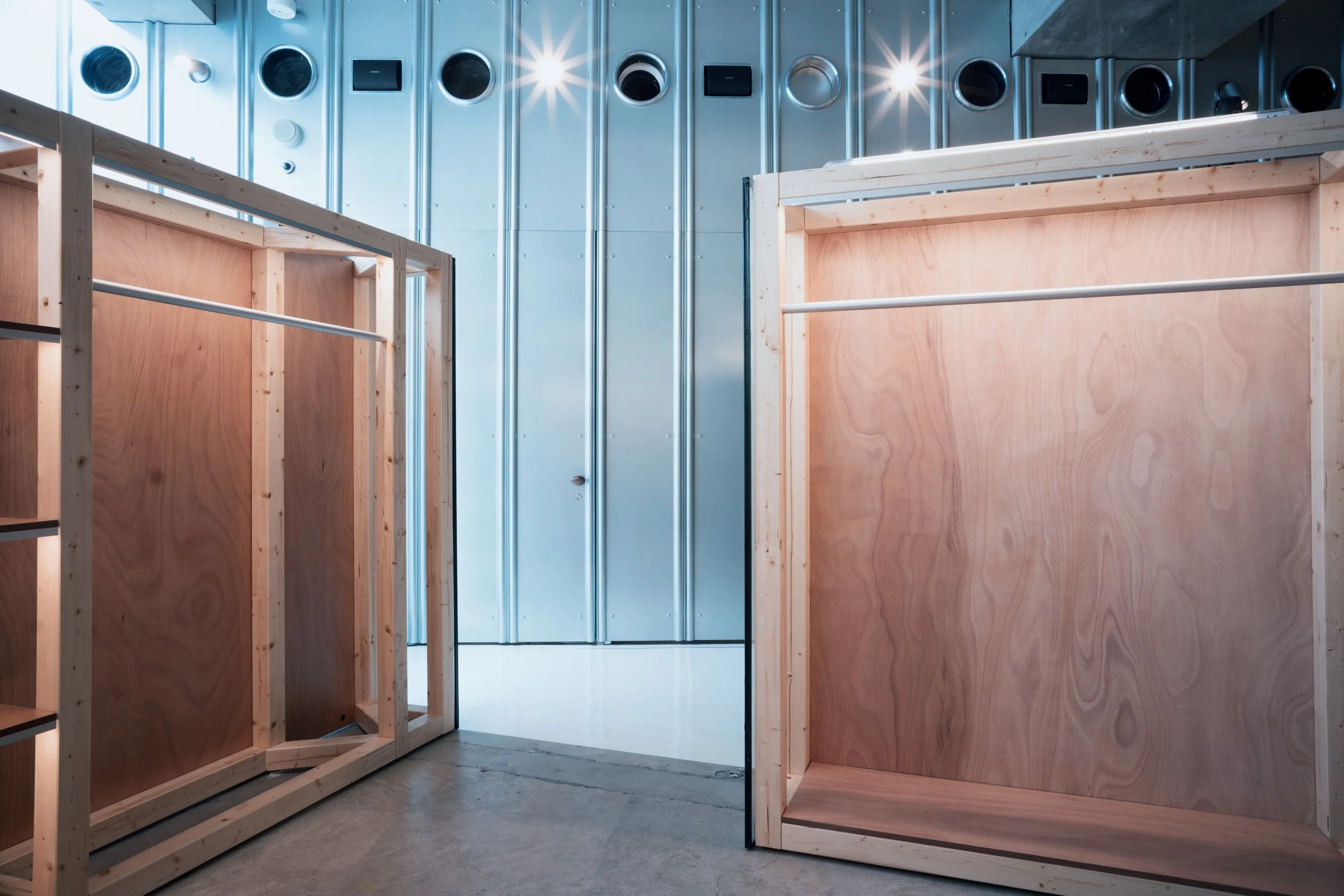
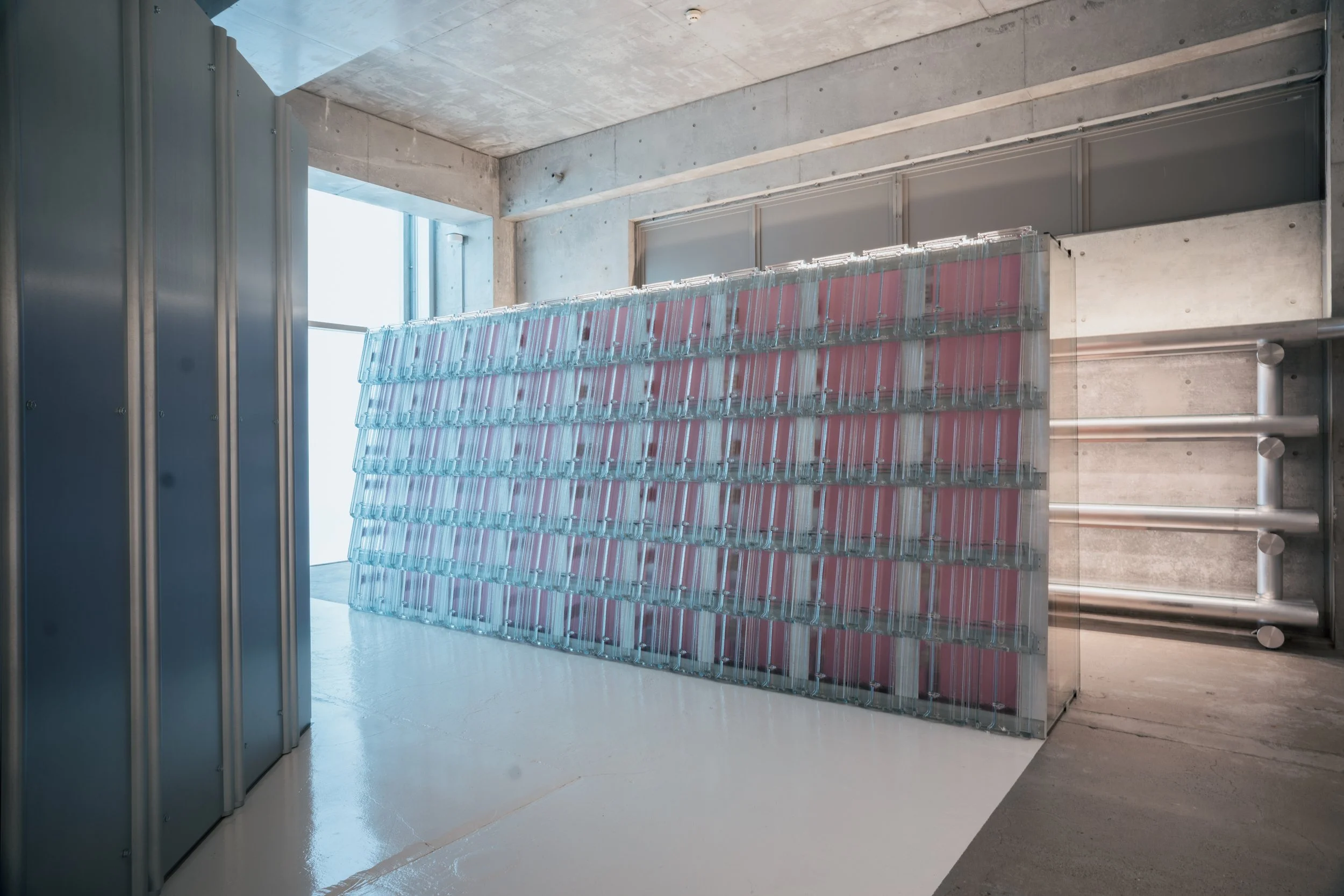
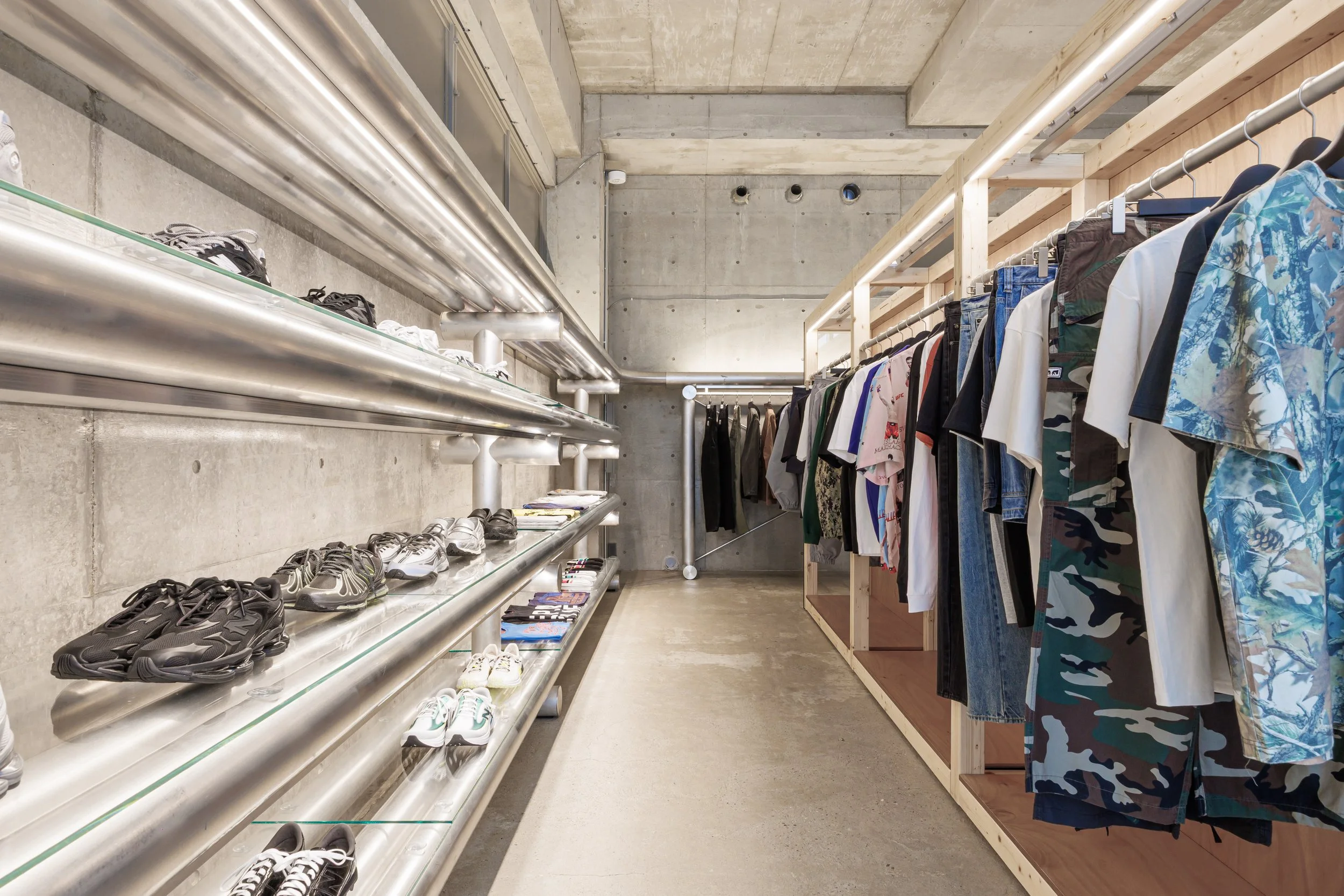
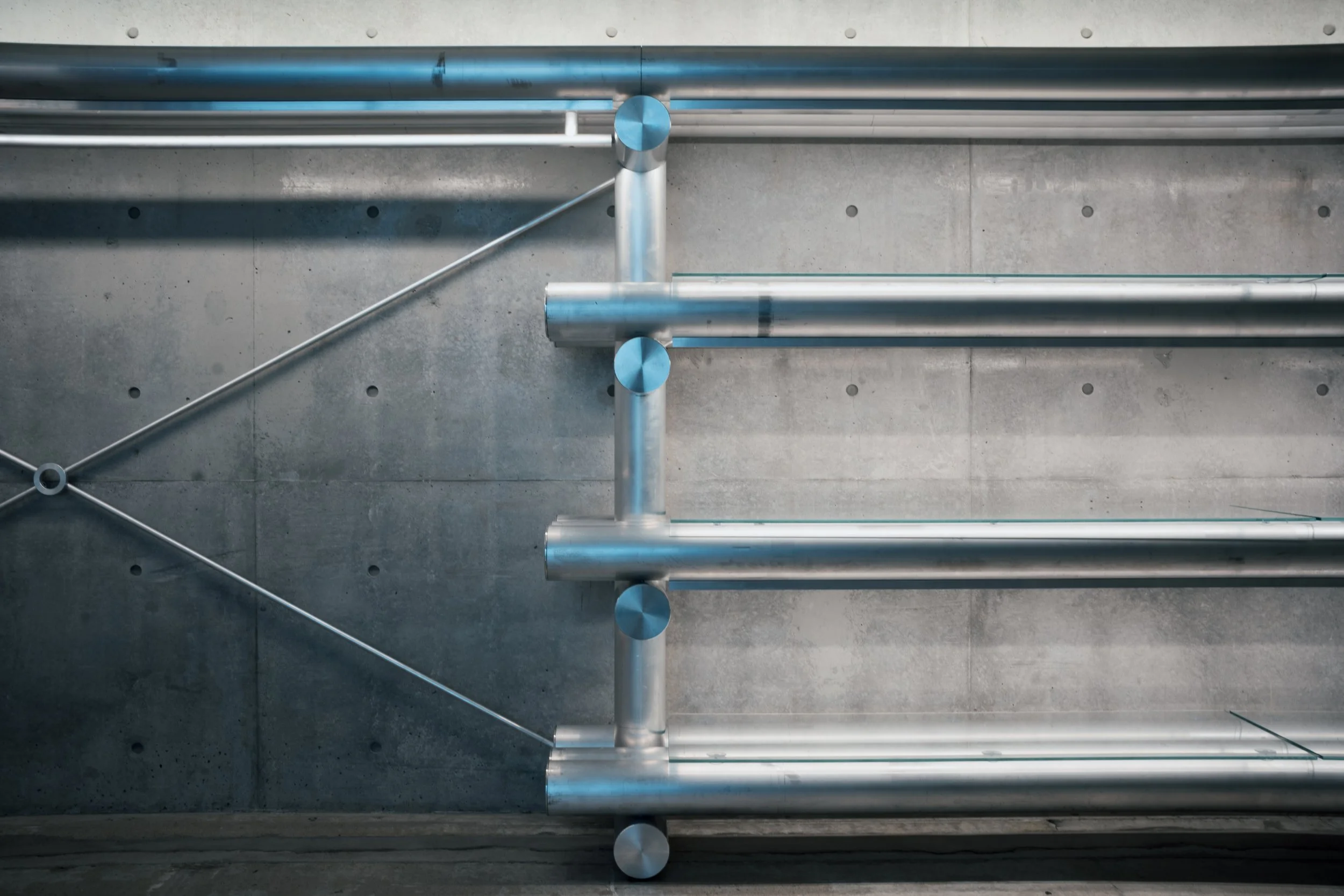
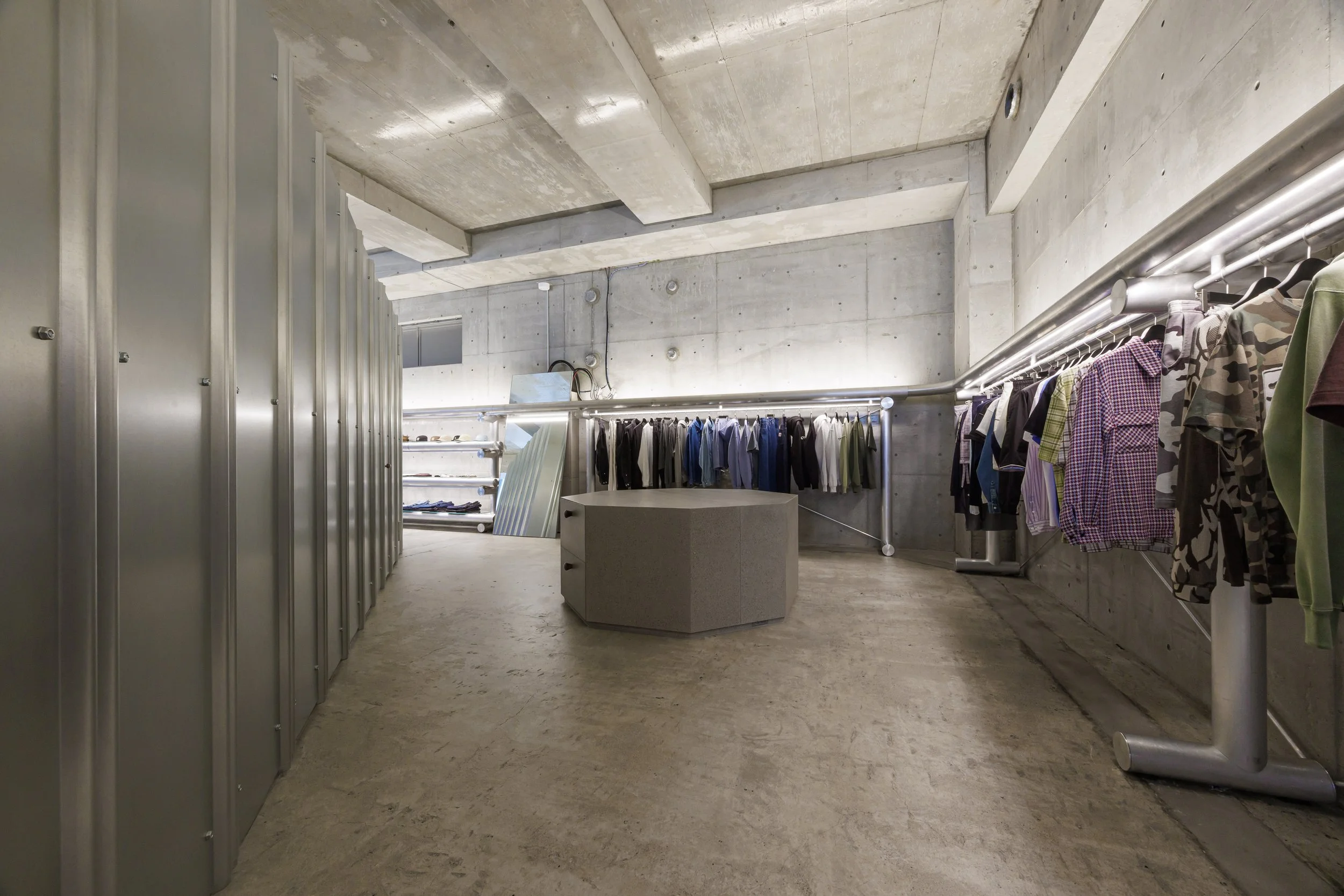
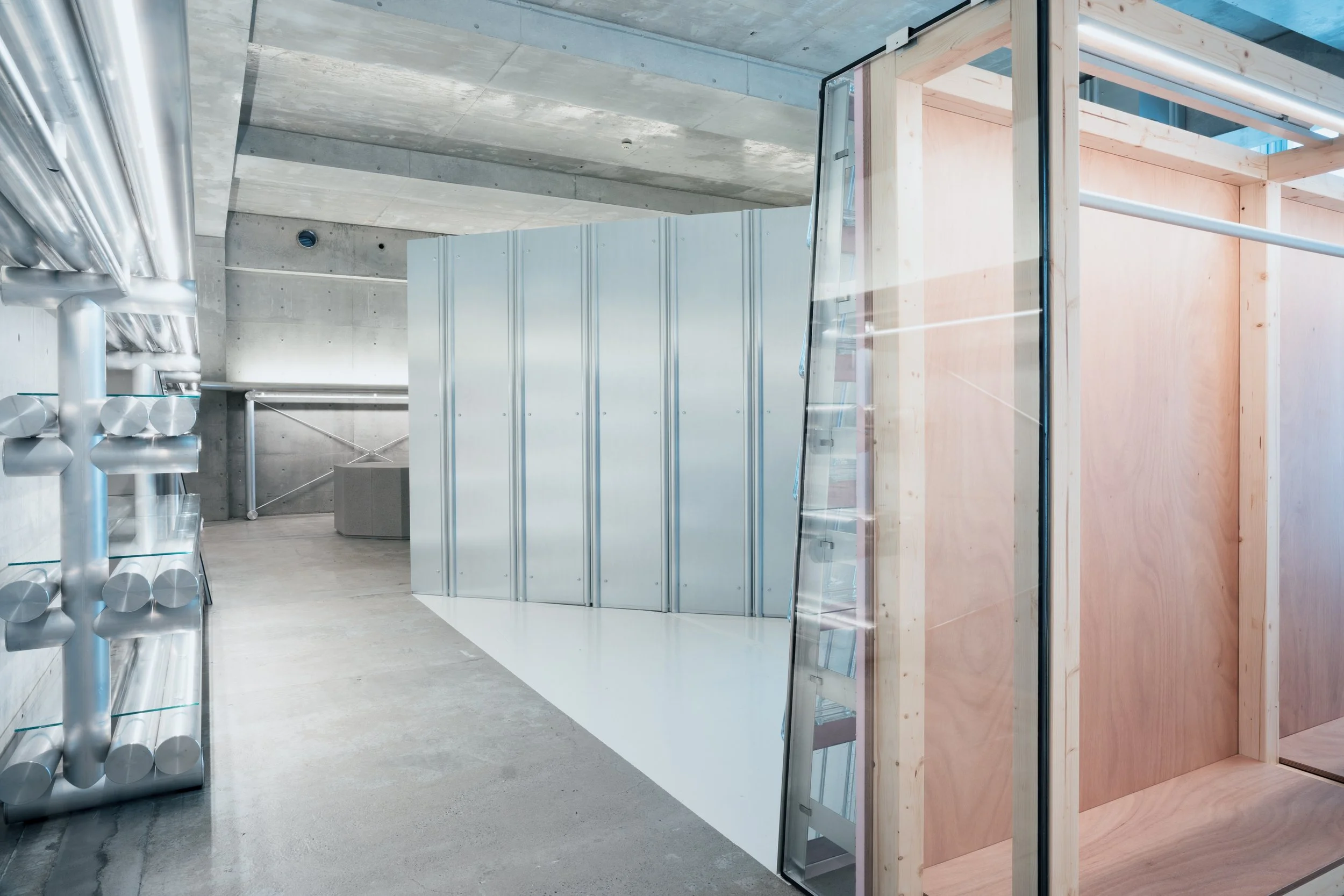
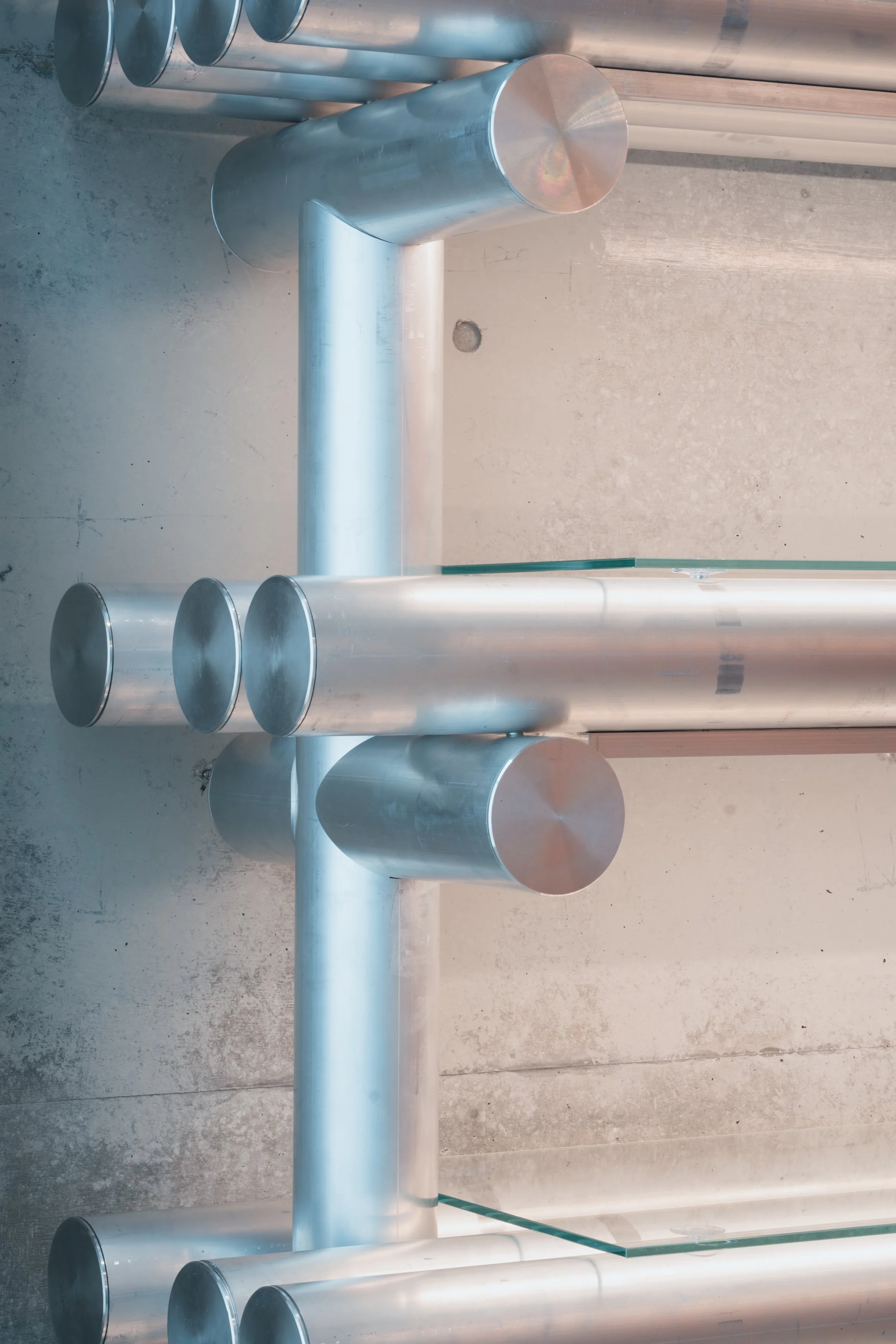
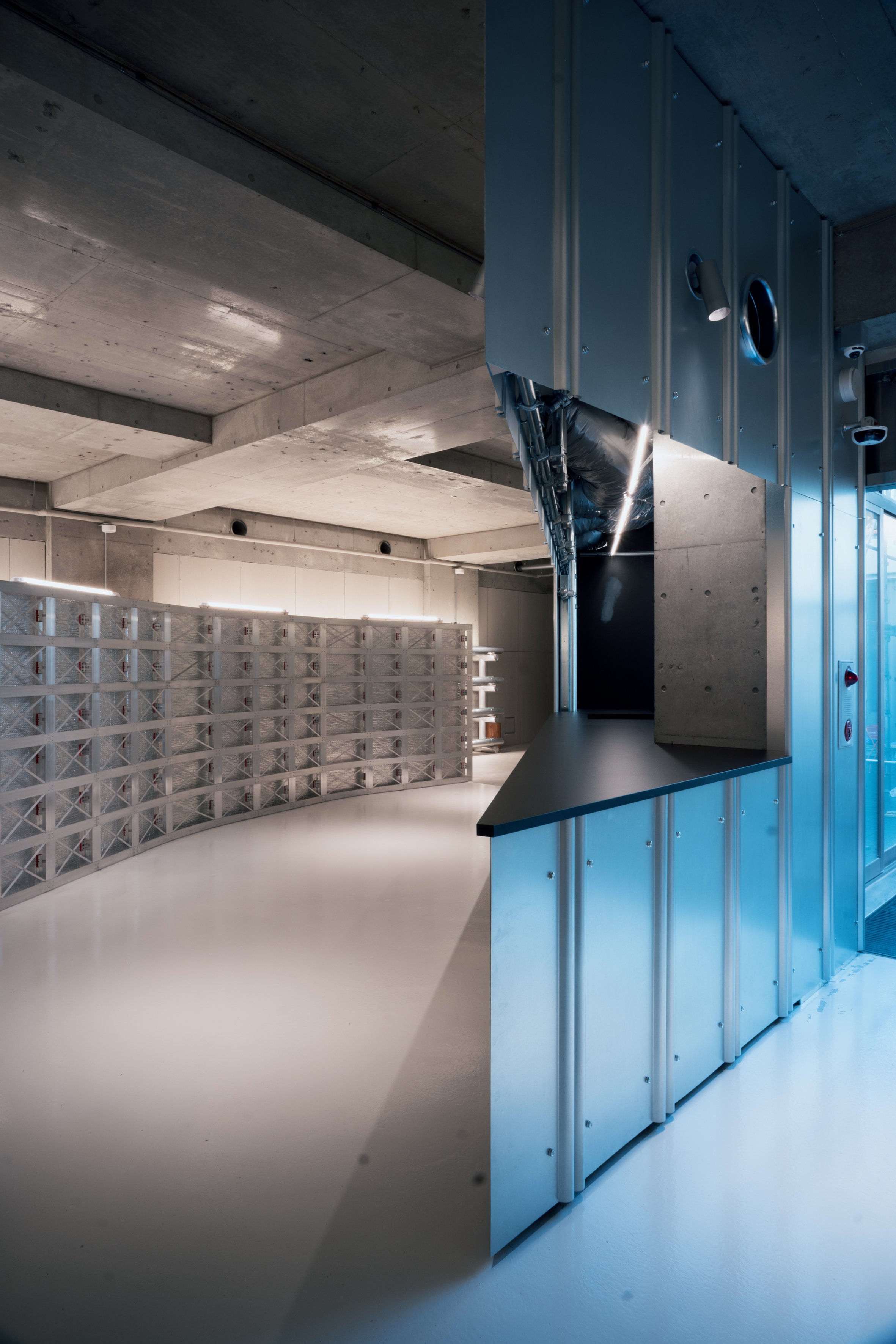
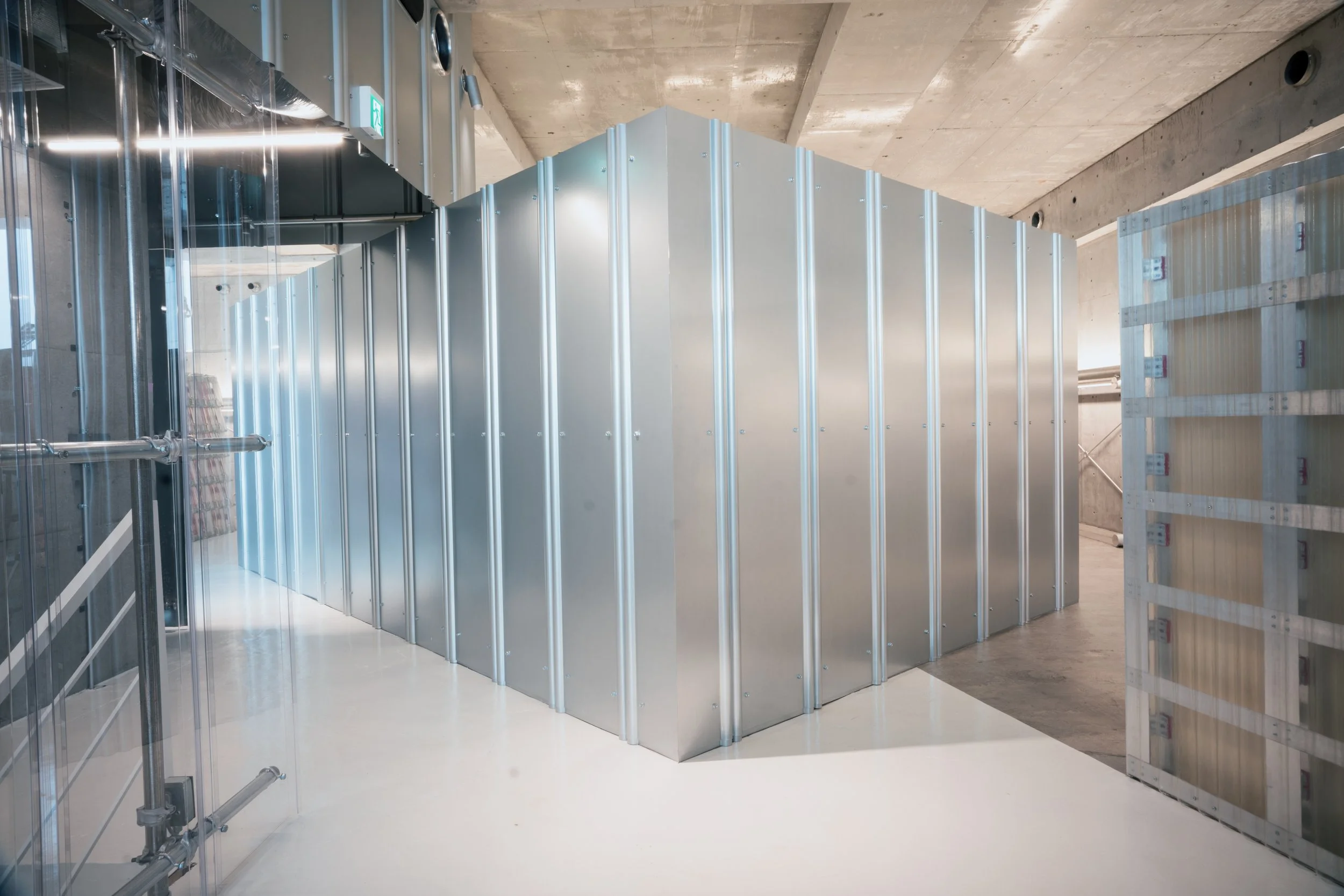
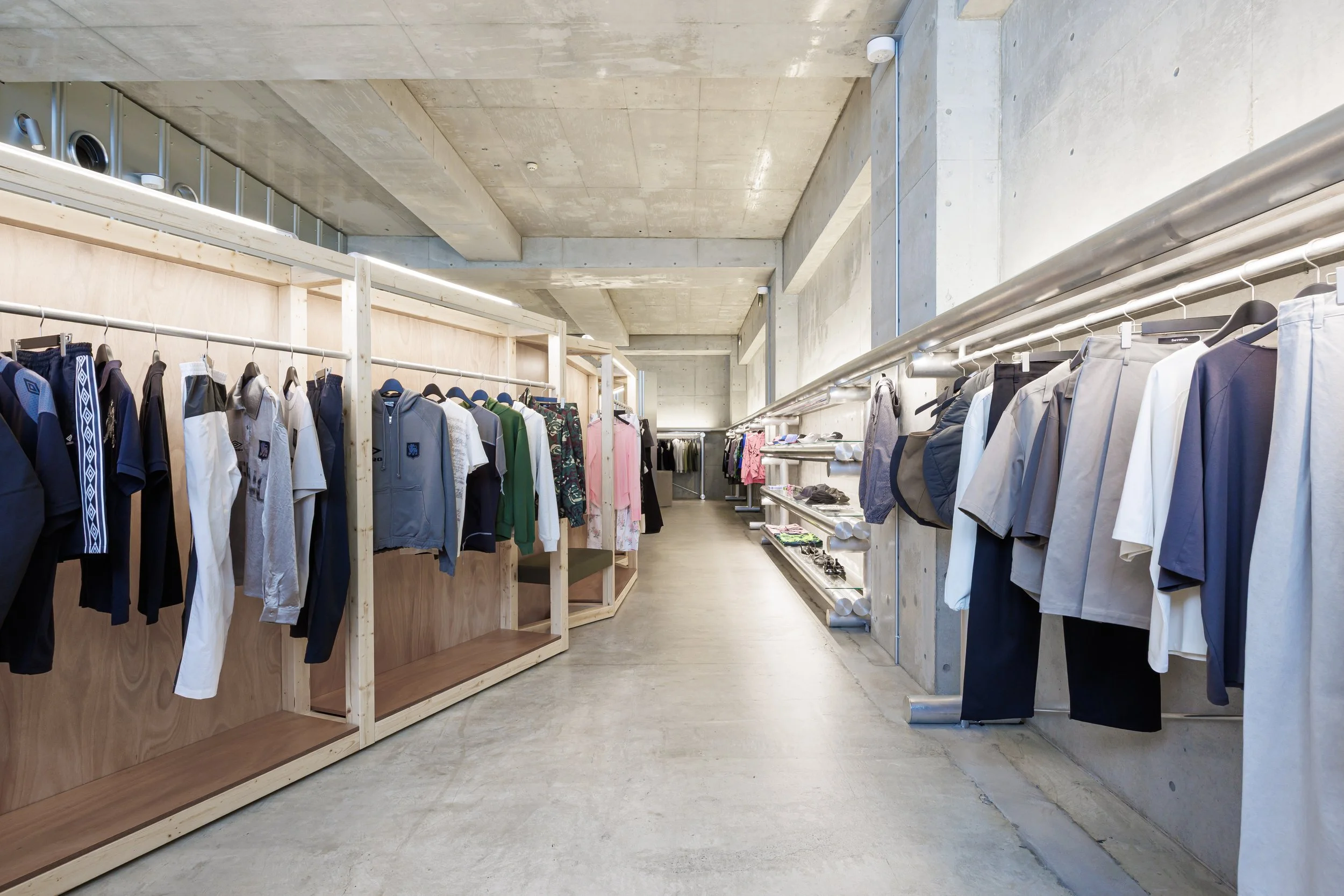
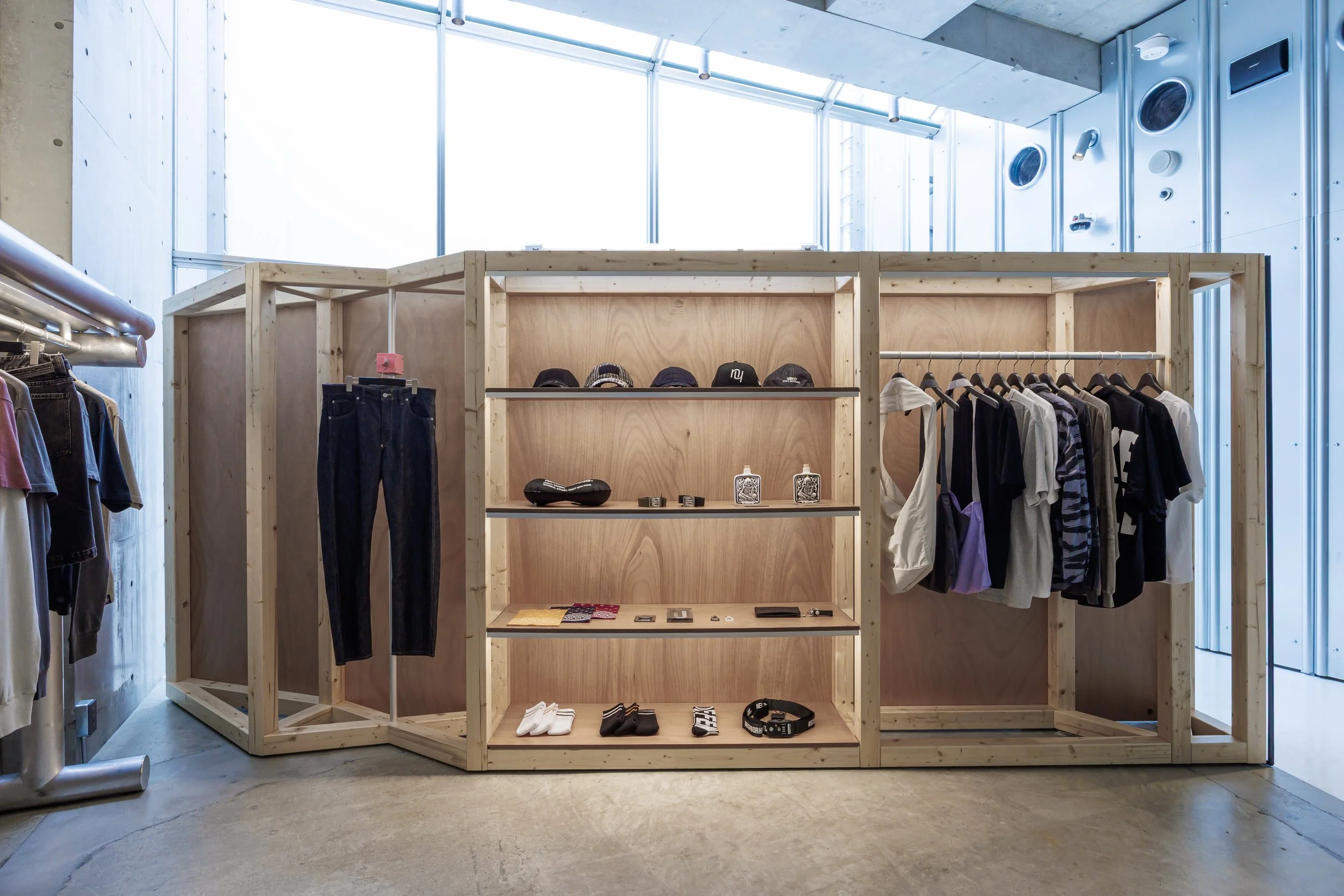
The interior project for WORKSOUT AOYAMA significantly repositions the contemporary strategies typically associated with multibrand retail environments. Rather than conceiving the spaces as a refined yet conventional platform for the display of carefully selected products ̶a practice that has long defined the curatorial strength of the Korean company ̶the project proposes a more radical hybridisation. Approximately fifty per cent of the total surface area is dedicated to exhibition environments intended to host research-driven content in the fields of design, architecture, and the visual arts.
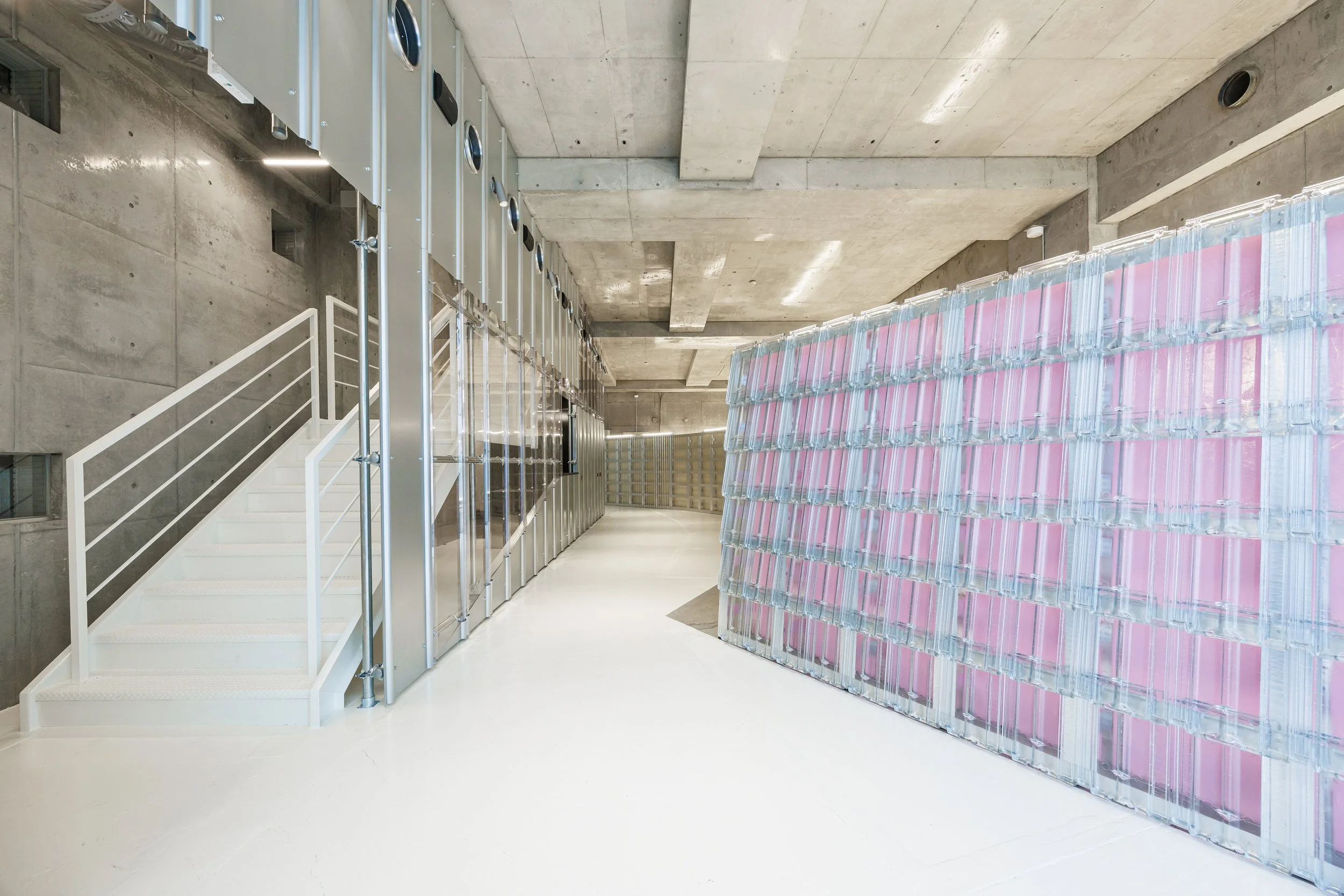
Through this shift, the building becomes progressively contaminated by a parallel programmatic logic. Developed across three levels, each floor integrates a clearly defined spatial zone that can be associated with the typology of a gallery. These areas establish a deliberate distance from the more explicitly commercial zones, both in their spatial configuration and in their material expression. The intention is not to negate the retail dimension, but to destabilise its primacy by embedding within it a continuous curatorial infrastructure.
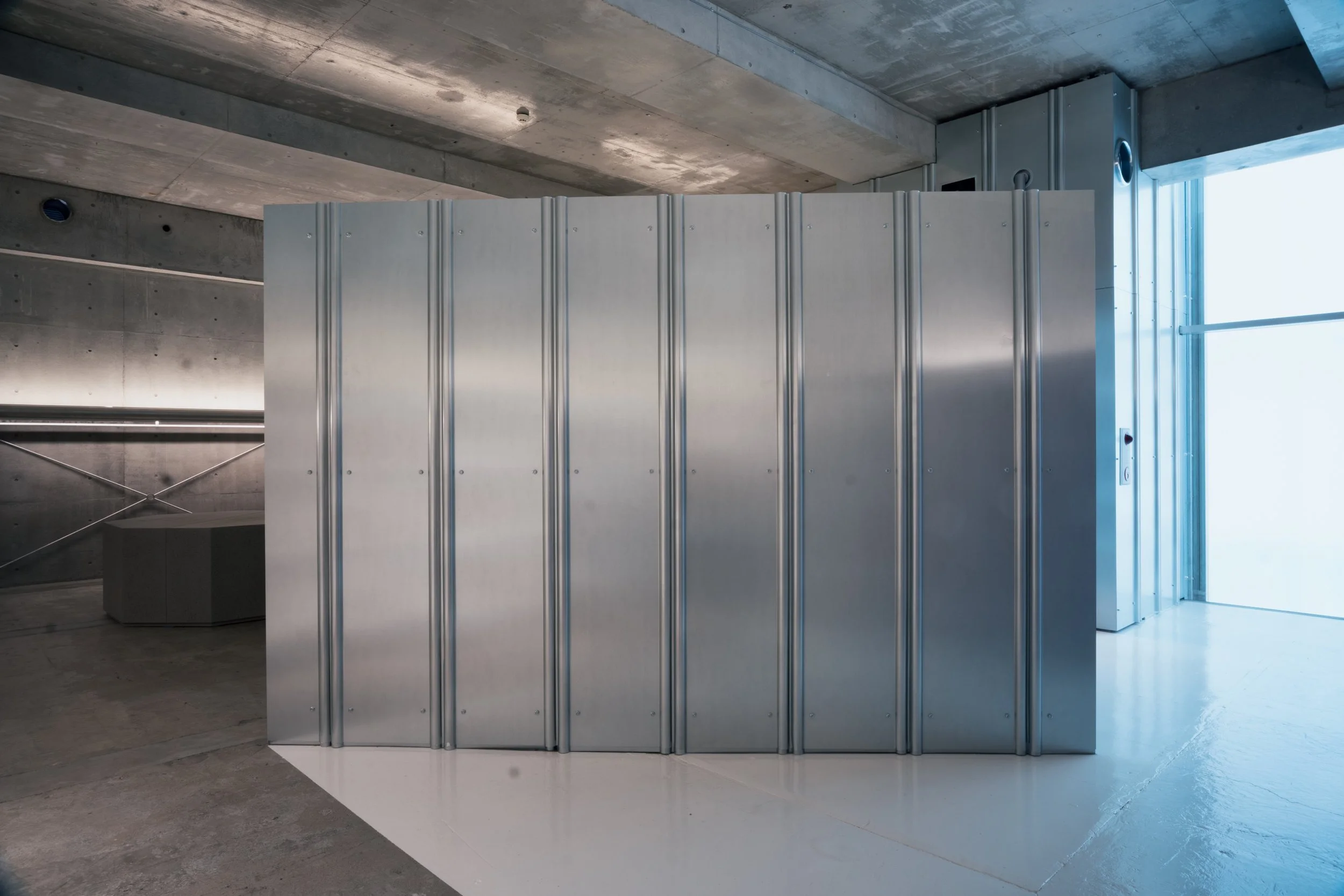
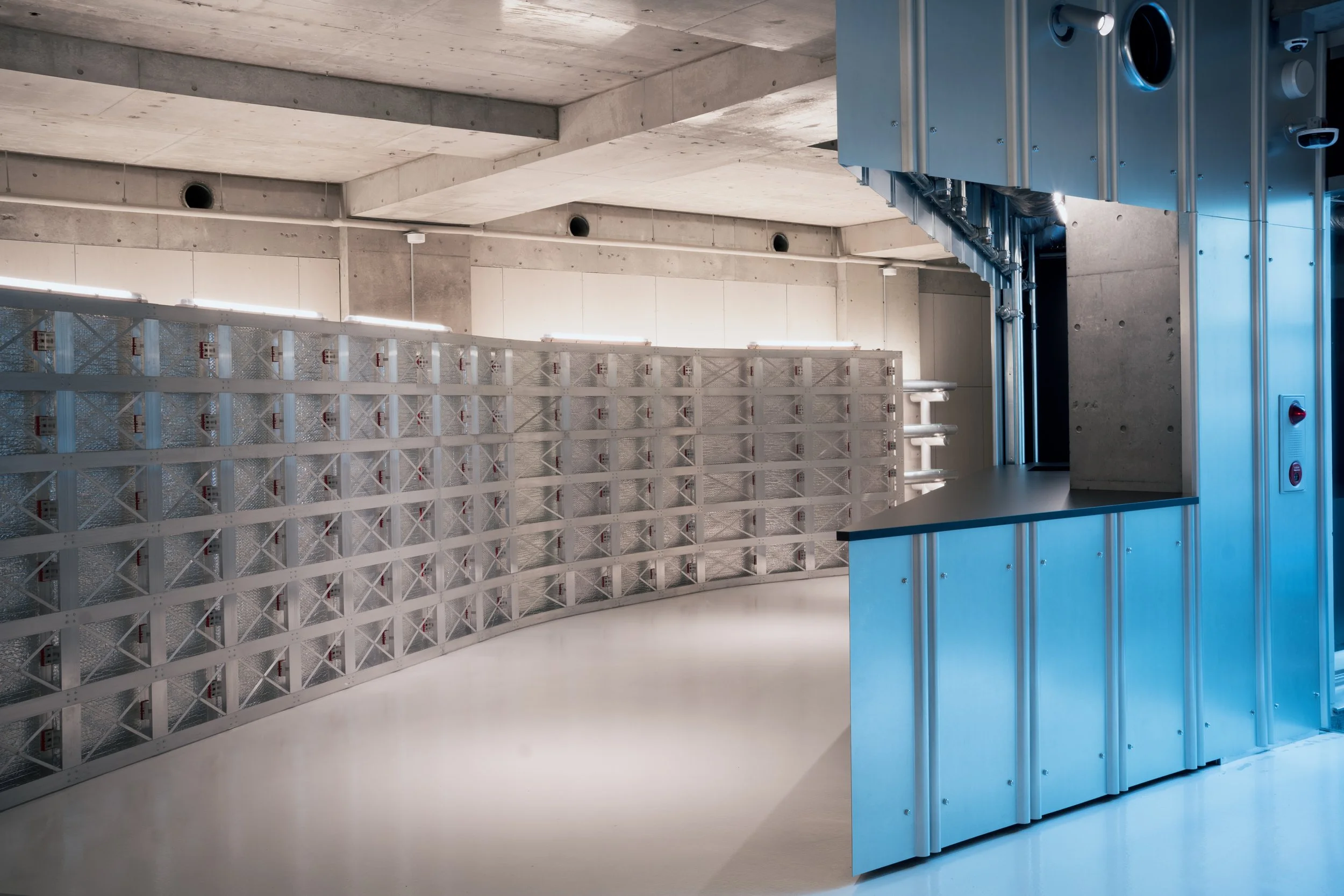
The exhibition spaces are conceived at a heightened level of abstraction. Their floors are finished in a white, glossy surface capable of accommodating a wide range of installations and temporary interventions. These neutral platforms are framed by a sequence of architectural backdrops ̶theatrical wings that emerge from Andrea Caputo Studio’s long-standing research into construction systems. In particular, these elements are imagined as literal dissections of ventilated façades: fragments presented at different stages of assembly which, in revealing their constructive logic, become an ideal scenographic background for artistic insertions and experimental displays.
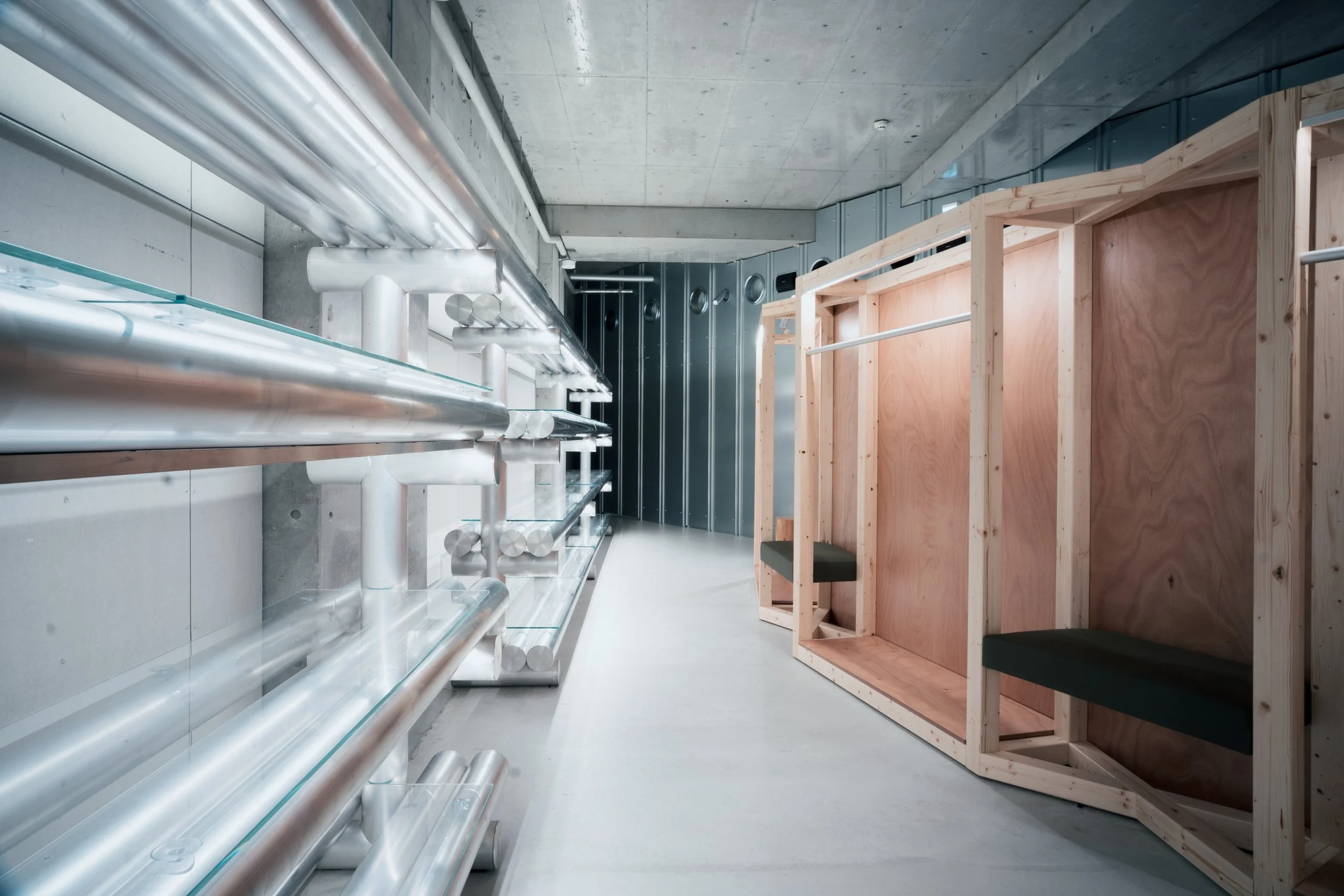
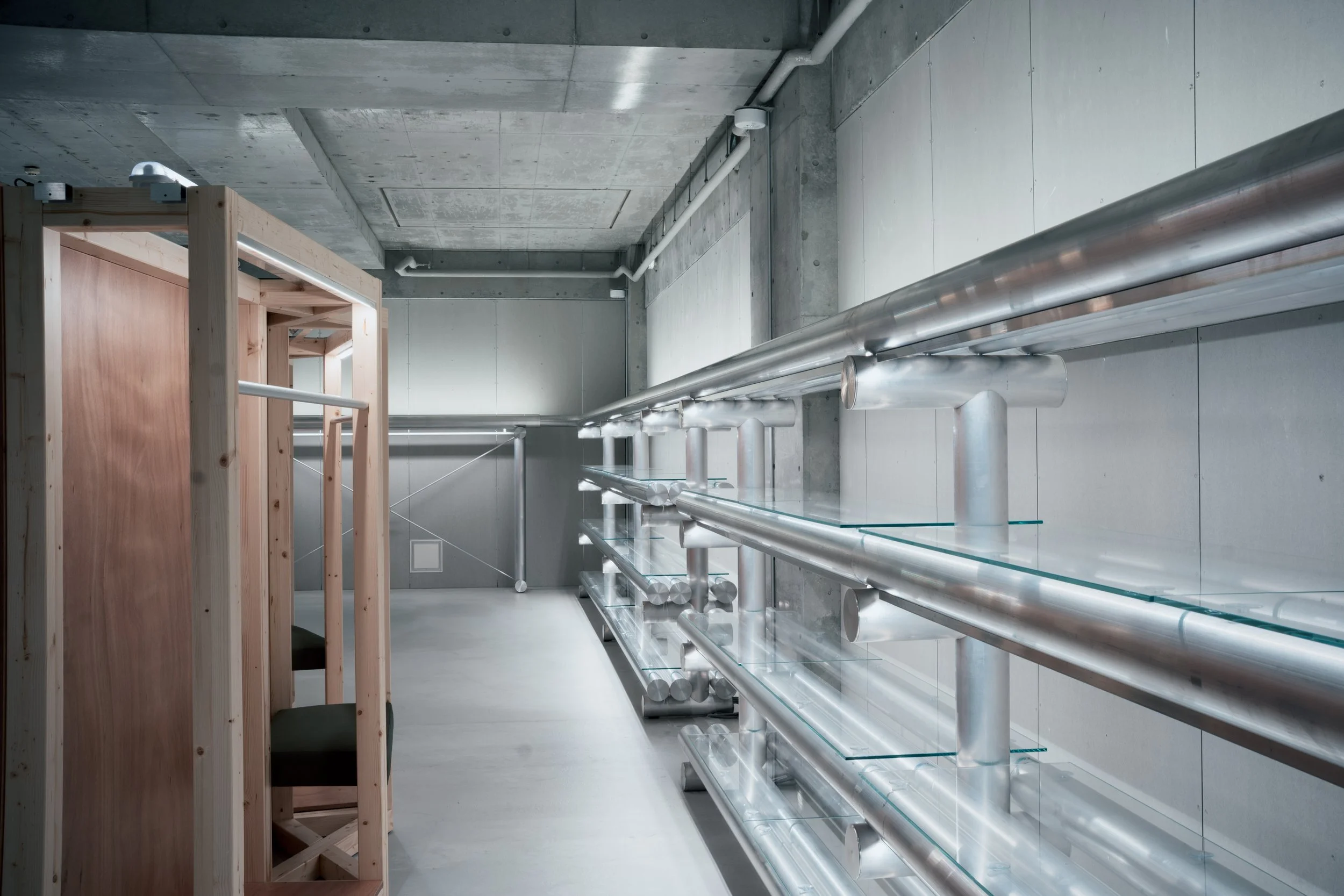
Behind these gallery zones, along the perimetral portions of each level, the spatial atmosphere gradually shifts towards the operational requirements of retail. Here, the brand universe of WORKSOUT and the various multibrand selections are displayed along an extended system of custom-designed metallic walls. These devices establish a productive contrast with the deliberately exposed, almost brutalist presence of unfinished concrete surfaces that define the remaining portions of the interiors.
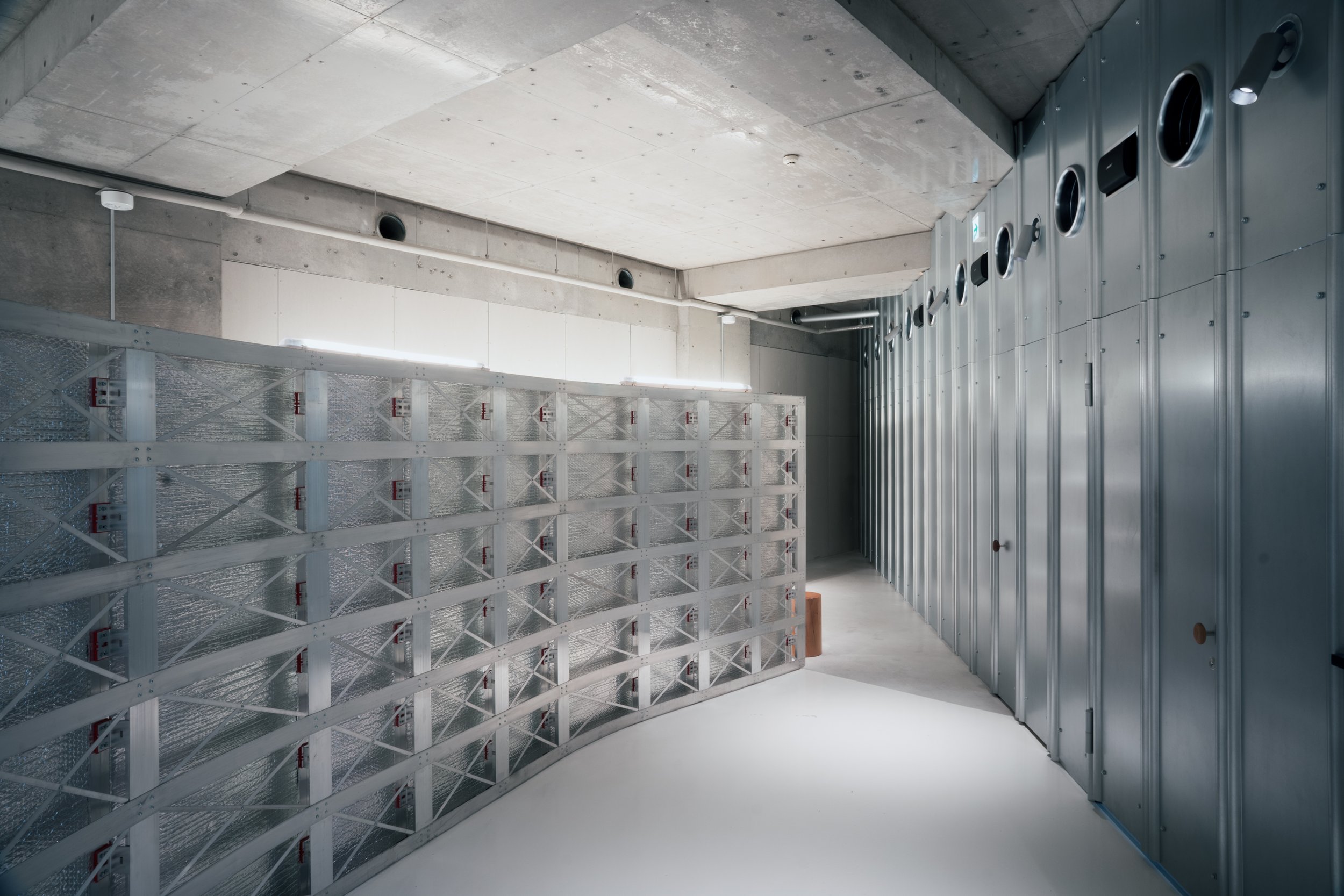
A substantial design effort has been directed towards the complete disappearance of visible building services. Lighting systems, as well as mechanical heating, cooling, and air-exchange devices, are fully concealed. This is made possible through the strategic concentration of all infrastructural components within the scaffolding volume that enters the building from the exterior envelope. Acting simultaneously as spatial organiser, storage device, acoustic support, and technical container, this continuous framework absorbs the entirety of the programmatic apparatus, allowing the remaining spaces to operate with an unexpected degree of clarity and conceptual precision.
In this sense, the interior project extends and radicalises the architectural idea of temporality and neutrality developed on the façade. The building becomes a layered field in which commerce, research, exhibition, and infrastructure coexist without rigid hierarchies, proposing a new model for multibrand environments in which cultural production and retail experience are no longer treated as separate domains but as mutually generative conditions within the contemporary city.